
Bilawal backs 27th Amendment in National Assembly, vows to protect provincial rights

ISLAMABAD: Pakistan Peoples Party (PPP) Chairman Bilawal Bhutto Zardari, addressing the National Assembly on Thursday, strongly condemned the recent terrorist attacks in the country. He said Pakistan was facing difficulties and the Interior Minister should come to the House and brief it.
He asked the opposition to start using the power it has. He said the opposition would have to play an active role. He said that staying out of the finance committee had weakened the role of parliament, and that if parliament is strong, all of us are strong.
Bilawal said that, whether they sit on the treasury benches or the opposition benches, the whole House and the nation must set political differences aside and unite against the evil designs of terrorists.
He said Pakistan’s army, politicians, civil society and people had defeated terrorists in the past too. He said they had achieved what the whole world, including NATO forces, could not in Afghanistan. He expressed the resolve that Pakistan would once again emerge successful in the war against terrorism.
The PPP chairman said that his own and the whole party’s effort had always focused on building consensus in legislation. He recalled that the 1973 Constitution and the 18th Amendment were passed by consensus, and the same spirit was shown during the passage of the 26th Amendment, which became possible after long and tireless efforts.
According to him, the PPP had approached Maulana Fazlur Rehman, who later brought PTI and the SIC into the process as well. Bilawal said that not only Maulana Fazlur Rehman but PTI too was part of the constitutional consultation, even if it did not vote. He said Maulana Fazlur Rehman had voted for the 26th Amendment with PTI’s consent.
Article 243 and the 27th Amendment
The PPP chairman said the 27th Amendment was in fact an attempt to fulfil the promises made in the Charter of Democracy, including the promise to set up a constitutional court. According to him, after Pakistan’s historic victory over India, the amendment gives constitutional protection to the office of Field Marshal under Article 243.
He said some changes were being made in the Constitution relating to the defence institutions. He said the real strength of any law or amendment lies not in the majority that passes it but in the political consensus behind it. In his words, the 1973 Constitution remains the uncontroversial and unanimous Constitution today, because it was passed by all political parties under the leadership of Quaid-e-Awam Zulfikar Ali Bhutto, and no dictator or tyrannical politician can destroy that consensus.
Bilawal said that when the PPP and the Pakistan Muslim League-Nawaz defeated a dictator and took charge of government, they passed the 18th Amendment, which introduced basic democratic reforms and ensured provincial autonomy. According to him, the 18th Amendment cannot be undone, because it rests on broad political consensus and carries the signatures of all political parties, not only the PPP and the PML-N.
Chairman Bilawal said the government had approached him about the proposed amendment. According to him, if the amendment concerns the defence structure, it means the government has consulted the institutions concerned, and if it concerns judicial reforms, the government must have consulted judges and lawyers.
He said he was approached as PPP chairman and put the matter before the party’s Central Executive Committee. After long deliberation, it was decided to support the government in fulfilling the vision of the Charter of Democracy.
He said that when six Indian aircraft were shot down, the Field Marshal and Pakistan’s armed forces were praised around the world for inflicting a historic defeat on the government of Narendra Modi. According to him, India has hosted Afghanistan’s foreign minister on the other border. In that context, the PPP decided to support the government’s recommendations on Article 243.
He expressed regret that the opposition parties chose instead to make noise for their jailed leader. He said, “I have fulfilled my responsibility, but the responsibility to attend committees and offer proposals also lies with the opposition, which it did not fulfil.”
Provincial rights and the judiciary
Bilawal said that, with the establishment of constitutional courts, the PPP appreciates that the government accepted the demand to give all provinces equal representation in the new courts. According to him, the federation will be strong only when all provinces are treated equally.
He said the political forces opposing the 27th Amendment should acknowledge that it is a historic milestone, because for the first time every province is being given equal representation in the constitutional courts.
He recalled that when Quaid-e-Awam Shaheed Zulfikar Ali Bhutto was subjected to a judicial murder, the bench of the time did not have equal representation of the provinces. In his words, “We are still suffering the consequences of that injustice today.” He said those who speak of provincial equality, whether Mr Achakzai or anyone else, should appreciate this historic development, which ensures real equality among all provinces.
Bilawal said that after the era of former Chief Justice Iftikhar Chaudhry, all political parties, including the PPP and the PML-N, were affected by the misuse of suo motu powers. He said the courts were fixing the prices of tomatoes and potatoes, building dams and insulting prime ministers, ministers and elected representatives. According to him, after this amendment the power of suo motu notice will end, and the sword that the courts had kept hanging over the heads of prime ministers and governments will be removed for good.
He said many points of the Charter of Democracy were yet to be implemented so that the crises facing the country could be overcome. According to him, “We must move towards truth and reconciliation and accept that this country belongs to Shehbaz Sharif, Achakzai and Imran Khan as much as to any other citizen.”
He stressed that political divisions must now end and mutual tolerance should be promoted. He said that until politicians respect each other and this House, the country will not get the governance it deserves. He invited the opposition not to turn away from parliament and to keep up dialogue among political parties so that the present deadlock could be ended democratically.
The PPP chairman said that in its initial draft the government had proposed ending the constitutional guarantee given to provincial governments under the NFC Award, which the PPP strongly rejected. He said that as long as he is head of the party, he will never support taking back the constitutional guarantees given to the provinces.
According to him, although everyone wants the country to overcome the financial crisis, such proposals in fact suggest that “we are ready to compromise provincial rights because of the FBR’s failure to meet its targets”. Bilawal said he was ready for talks with the government and could prove that collection of the taxes handed over to the provinces had always been better than that of the federation.
He reaffirmed that the PPP would never support taking any right back from the provinces. Instead, it would speak up for what the federation can do to make the provinces stronger. According to him, Punjab, Sindh, Khyber Pakhtunkhwa and Balochistan should not be punished for the failures of the FBR or other federal financial institutions. All provinces should instead be empowered and held responsible for better performance.
He added that the government had proposed transferring the education and population departments back to the federation. These were powers transferred to the provinces under the 18th Amendment, which, he said, had buried the politics of separatism. He said conspiracies were being hatched against Pakistan from across the border, so the government should avoid steps that could revive separatist elements or help the enemy.
Bilawal said that was why the PPP was not ready to compromise in any way on taking powers back or on the constitutional guarantees given under the NFC Award.
He said the PPP had proposed a balanced procedure for the appointment and transfer of judges, under which the Judicial Commission could also take the view of the judge concerned, and the government had agreed with the recommendation. He thanked the government for dropping the idea of forcibly retiring judges.
He said strengthening local governments had always been part of the PPP’s core philosophy, and the party wanted further talks on the subject. According to him, any panel of experts would confirm that measures to empower local governments in Sindh are better than in all other provinces. He said the PPP would be happy to take forward the existing consensus on South Punjab.
The PPP chairman assured the Prime Minister that the party would find a democratic solution to end the deadlock over appointments to the Election Commission.
Finally, Bilawal stressed that political parties are the real strength of government and parliament. He said no legislation should therefore come suddenly, and every proposed law should be considered in detail through discussion and consensus.
More from Pakistan
Ishaq Dar vows to strengthen Pakistan-China ties further at Islamabad symposium
Raja Pervaiz Ashraf urges PTI to play full role in parliament
Senate passes motion to form parliamentary committee on electoral reforms

Ten years after Fata merger, basic problems of settled system remain unresolved: Fazlur Rehman

Jinnah Medical Complex 59 per cent complete, PM orders targets met on time
Small business lending is government’s top priority, says PM Shehbaz Sharif
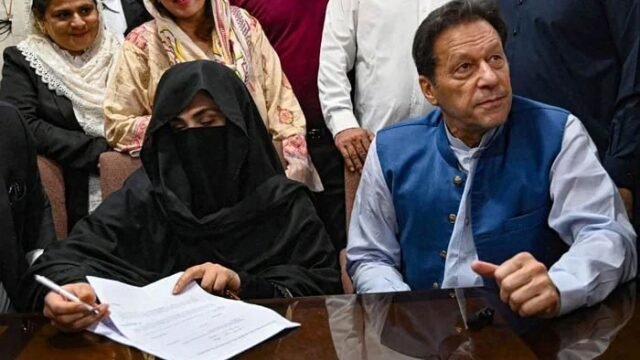
Barrister Salman Safdar meets Imran Khan and Bushra Bibi in Adiala Jail for 40 minutes

Trump administration asks Supreme Court to halt count of over 20,000 California mail ballots

PTI political committee says no factions in party, objects to arrests and raids

Chinese party minister Liu Haixing meets PM Shehbaz Sharif and Field Marshal Munir

Real issue in tribal areas is minerals, not the constitution: Fazl
