
India’s unilateral steps a grave threat to South Asian peace, says Pakistan’s envoy

In an article in a United States magazine, Pakistan’s Ambassador gave a reasoned reply to the article written by India’s Ambassador to the United States.
The ambassador made it clear that India is continuously making failed attempts to distort the structure, history, purpose and usefulness of the Indus Waters Treaty.
He said the treaty, signed in September 1960, was neither a favour from India nor a concession to Pakistan. It was the result of negotiations that had lasted a decade. He said both parties are bound to comply with this legal agreement. Under the agreement, India received the right to use the Ravi, Beas and Sutlej, while Pakistan received the right to the waters of the Indus, Jhelum and Chenab.
The ambassador said that India’s description of the agreement as unjust completely ignores the circumstances in which the treaty was negotiated.
He also rejected India’s allegation that Pakistan has tried to obstruct India’s hydropower projects. He said the court has also confirmed that hydropower projects on the western rivers must conform to the prescribed limits.
The ambassador said that, in this situation, seeking to resolve a dispute or going to arbitration is not an obstruction but the exercise of a right granted under the treaty. Legally, he said, the Indus Waters Treaty remains effective, in force and binding on both parties.
The ambassador warned in clear terms that no state can be absolved of its obligations under an international treaty by making unrelated political or security allegations. He said that neither baseless allegations of terrorism nor other bilateral disputes can give India a unilateral right to suspend the Indus Waters Treaty, disregard it or rewrite it.
He said the legal position is clear: the Indus Waters Treaty contains no provision allowing either party to suspend or end it unilaterally. It cannot be ended unless a formal, ratifiable agreement is concluded between the two governments.
Rizwan Saeed Sheikh said India should fulfil its obligations under the treaty and hold talks at the institutional level and through the dispute resolution mechanism.
More from World
New Israeli attacks on Iran would be disastrous for global markets: Araghchi

US Vice President writes to Mohsen Rezaei to revive talks with Iran
Erdogan tells Trump Turkiye is seeking diplomatic solutions on Hormuz and Yemen

US weapons left in Afghanistan boosting militants’ capability, says report

US sacks top military planner Lt Gen Brett Sylvia, The Atlantic reports

Iran claims it downed US drone and took control of another in Strait of Hormuz

Attack on Iran one of my best decisions, will do it again if needed: Trump
Netanyahu’s Likud accuses Arab parties of election fraud, seeks investigation

Death toll from Spain train collision passes 60, dozens of injured in critical condition
Mojtaba Khamenei meets Mohsen Rezaei on Strait of Hormuz and terms to end war
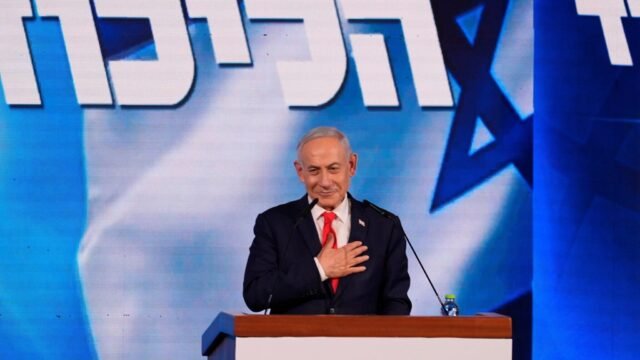
Netanyahu and Eisenkot both claim right to form government after deadlocked Israeli election
