Petroleum prices to fall, says minister, as govt outlines LPG and winter gas plans

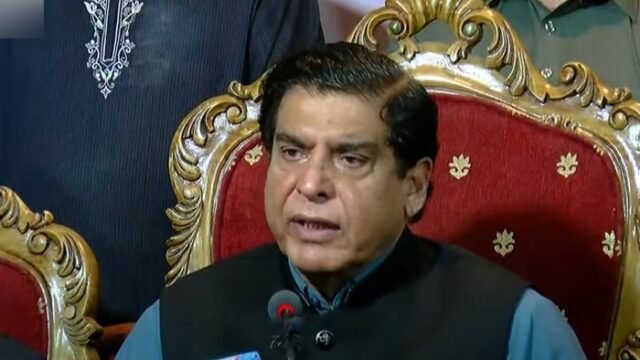
ISLAMABAD: Petroleum Minister Ali Pervaiz Malik has said the public will receive good news on a reduction in the prices of Petroleum Products. He said this at a press conference in Islamabad along with Information Minister Attaullah Tarar.
Ali Pervaiz Malik said people were certainly facing great hardship. Prices have fallen further in the international market, and the benefit will be passed on to the public, he said.
He said efforts would be made to ensure pipeline gas supply to domestic consumers at all three mealtimes. Even if large ships reach Pakistan, proper infrastructure will be needed to unload and store the cargo. For this reason, he said, the government is trying to improve the whole LPG import and distribution system afresh.
LPG shortage and prices
The petroleum minister said ordinary citizens were suffering because of the shortage of LPG and rising prices in the country. Complaints have been received that in some cities the price of LPG has reached Rs700 to Rs800 per kilogram. There are also problems of availability in various areas.
He said that, on the prime minister’s directions, the relevant sectors have been contacted over the past few days to stop profiteering from the public’s helplessness.
According to Ali Pervaiz Malik, Pakistan’s total annual demand for LPG is about 2.4 million tonnes. This means that about 6,500 to 7,000 tonnes of LPG are needed every day. About 2,000 to 2,500 tonnes of LPG are produced locally every day. This includes the share of exploration and production (E&P) companies and local refineries.
He said that in the past a large quantity of LPG reached Pakistan through the western border. However, the sector faced difficulties when border supplies were disrupted. The remaining needs are met by LPG imported by sea.
According to him, there are two terminals, those of Engro and SSGCL, for importing LPG by sea. Their combined storage capacity is about 14,000 tonnes. He said the LPG supply system ran for a long time without proper planning and without regard to future needs. This, he said, has exposed the lack of infrastructure in the energy sector.
Planning for winter
Ali Pervaiz Malik said the cold would peak in December and January, so the government is already making arrangements to meet gas needs. The government is trying to import LNG to meet gas requirements in the coming winter.
He said efforts would be made to buy even the most expensive gas available and supply it to domestic consumers through the pipeline network. If the gap between gas demand and supply remains, a system of rationing or limited supply may also have to be adopted.
About 10 million consumers in the country are connected to the pipeline network. A large number of households also use LPG for cooking and other needs. According to him, it is necessary to ensure that LPG is available to these consumers at a reasonable price in winter as well.
Ali Pervaiz Malik said Saudi Aramco issues the contract price of LPG, a mix of propane and butane, every month. In Pakistan, the Oil and Gas Regulatory Authority (OGRA) issues a notification of monthly prices. According to him, the government has a limited direct role in fixing LPG prices. However, efforts are being made to protect consumers from profiteering and artificial shortages in the local market.
The petroleum minister said the prime minister, the federal government, the provinces and the relevant institutions have made joint efforts to deal with the energy crisis. He also mentioned the cooperation of President Asif Ali Zardari and the provincial governments. Various steps have been taken, including the recent cooperation of refineries and the use of about Rs130 billion in resources by the federal government.
He said that, alongside temporary measures, Pakistan needs permanent solutions in the energy sector. For this, storage capacity, refinery capacity, LPG import terminals and the whole supply network will have to be improved.
Federal Information Minister Attaullah Tarar said the whole world was currently facing an oil crisis and oil prices had risen globally. However, despite the difficult conditions, he said, the prime minister has not left the public alone. Every possible step is being taken to give maximum relief, he said.
According to Attaullah Tarar, refinery profits have been passed on to the public for the first time, so that people can be protected as far as possible from the effects of the global crisis. The prime minister has also directed that a strategy be prepared to ensure uninterrupted gas supply in winter.
More from Pakistan
Gohar says PTI founder was aware of governor’s rule and emergency in Khyber Pakhtunkhwa

Reforming state institutions is not easy, change must continue despite resistance: finance minister

Barrister Gohar says political tension must not rise, issues should be resolved through talks

PPP holds high-level meeting under Bilawal Bhutto Zardari, discusses meeting with prime minister

Shehbaz Sharif chairs security meeting, reviews Rs160 billion package for Khyber Pakhtunkhwa

Imran Khan will not back down from stance, says Salman Akram Raja

Pakistan successfully tests first indigenous air-to-air missile Fa’az

Electoral reforms committee: Speaker seeks record on PTI demand for equal representation

Maryam Nawaz sends defamation notice to Salik Hussain, Naeem Ashraf Butt and ARY

291 sacked UNHCR-backed school teachers stage sit-in in Peshawar, demand compensation
Ishaq Dar vows to strengthen Pakistan-China ties further at Islamabad symposium