
Nazir Akbarabadi: the poet of the bazaar and the fair
Between the times of Mir and Ghalib, a humble teacher in an Agra neighbourhood wrote poems of banjaras, bread, cucumbers, bear cubs, Holi and Diwali.
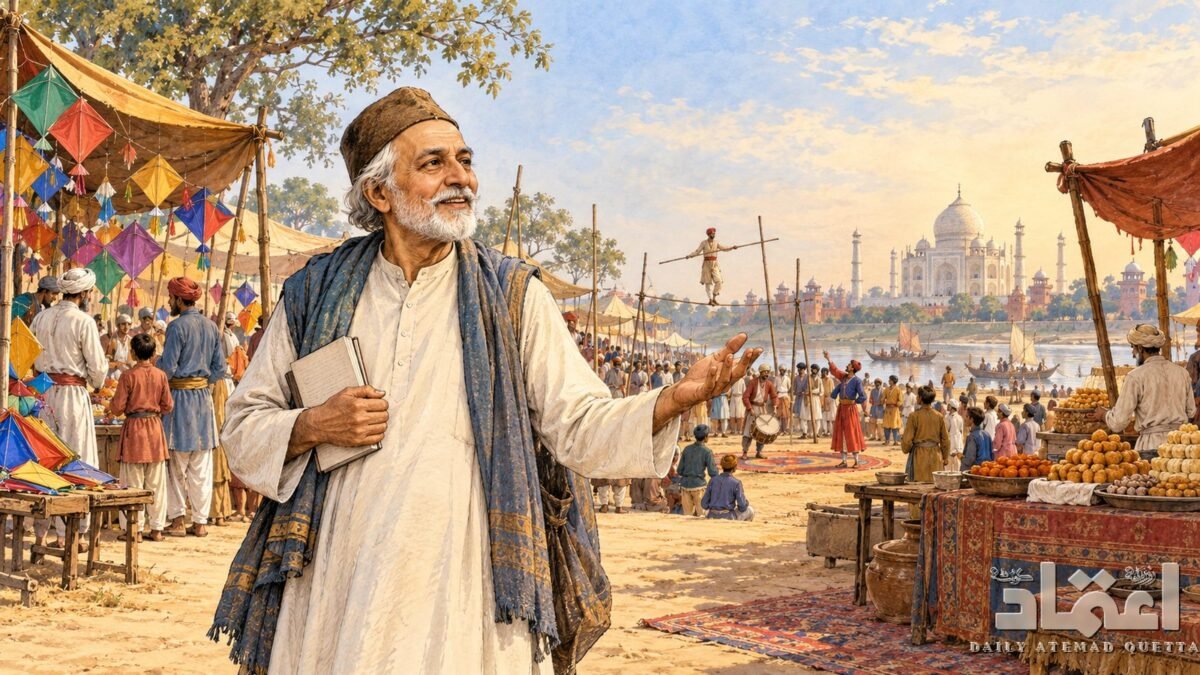
In the period between Mir and Ghalib, a humble teacher lived in a neighbourhood of Agra. He taught children, wandered through fairs and festivals, and wrote poems in which banjaras, bread, cucumbers, a bear cub, Holi and Diwali all appeared. The great poets of his day refused to accept him as a poet because he spoke of the bazaar in the language of the bazaar. Today the same poet, Nazir Akbarabadi, is regarded as the first great name in Urdu nazm. Every reader of Urdu has heard his “Banjara Nama” and “Aadmi Nama” at some time.
Life and times
Wali Muhammad, who wrote under the pen name Nazir, was born in Delhi around 1735. This was when a series of invasions of Delhi was beginning. In his childhood his family left Delhi and moved to Agra, then called Akbarabad. From this connection he became known as Akbarabadi and he stayed there all his life.
Nazir never looked for a court. He taught children in Agra and earned his living from it. Biographical accounts say that the court of Lucknow and the Raja of Bharatpur invited him, but he refused to leave Agra.
His life spanned much of a century. He saw with his own eyes the decline of Mughal rule, the rise of the Marathas and the British takeover of Agra (1803). He died in Agra in 1830 at a great age and was buried in the Taj Ganj area of the city.
Style
Nazir’s greatest distinction is his language. He wrote the Urdu spoken in the bazaar, fair and lanes of Agra, in which Hindi words, Khari Boli idioms and the everyday things of the common man appear freely. Rather than the ghazal, he made the nazm his main field, especially the form with stanzas of five or six lines in which a refrain line is repeated at the end of each stanza:
ٹک حرص و ہوا کو چھوڑ میاں مت دیس بدیس پھرے ماراقزاق اجل کا لوٹے ہے دن رات بجا کر نقارا
His poems can take up any aspect of life: bread, money, man, the seasons, festivals, animals, the fair. There is preaching in them, but not the tone of a sermon; he tells the truth of life while making people laugh. His other quality is generosity of spirit. He was a Muslim, yet he wrote poems on Holi, Diwali, the childhood of Krishna and Guru Nanak that are full of devotion and sincerity.
ہے دنیا جس کا نام میاں یہ اور طرح کی بستی ہےجو مہنگوں کو تو مہنگی ہے اور سستوں کو یہ سستی ہے
Selected verse
Nazir’s work is remembered more in the stanzas of his nazms than in ghazal couplets, so stanzas are included here along with couplets.
کیا بدھیا بھینسا بیل شتر کیا گونیں پلا سر بھاراکیا گیہوں چاول موٹھ مٹر کیا آگ دھواں کیا انگاراسب ٹھاٹھ پڑا رہ جاوے گا جب لاد چلے گا بنجارا
دنیا میں بادشاہ ہے سو ہے وہ بھی آدمیاور مفلس و گدا ہے سو ہے وہ بھی آدمیزردار بے نوا ہے سو ہے وہ بھی آدمینعمت جو کھا رہا ہے سو ہے وہ بھی آدمیٹکڑے چبا رہا ہے سو ہے وہ بھی آدمی
مسجد بھی آدمی نے بنائی ہے یاں میاںبنتے ہیں آدمی ہی امام اور خطبہ خواںپڑھتے ہیں آدمی ہی قرآن اور نماز یاںاور آدمی ہی ان کی چراتے ہیں جوتیاںجو ان کو تاڑتا ہے سو ہے وہ بھی آدمی
جب آدمی کے پیٹ میں آتی ہیں روٹیاںپھولی نہیں بدن میں سماتی ہیں روٹیاں
پوچھا کسی نے یہ کسی کامل فقیر سےیہ مہر و ماہ حق نے بنائے ہیں کاہے کےوہ سن کے بولا بابا خدا تجھ کو خیر دےہم تو نہ چاند سمجھے نہ سورج ہیں جانتےبابا ہمیں تو یہ نظر آتی ہیں روٹیاں
جب پھاگن رنگ جھمکتے ہوں تب دیکھ بہاریں ہولی کیاور دف کے شور کھڑکتے ہوں تب دیکھ بہاریں ہولی کی
گر تو ہے لکھی بنجارا اور کھیپ بھی تیری بھاری ہےاے غافل تجھ سے بھی چڑھتا اک اور بڑا بیوپاری ہےکیا شکر مصری قند گری کیا سانبھر میٹھا کھاری ہےکیا داکھ منقّا سونٹھ مرچ کیا کیسر لونگ سپاری ہےسب ٹھاٹھ پڑا رہ جاوے گا جب لاد چلے گا بنجارا
جب چلتے چلتے رستے میں یہ گون تری ڈھل جاوے گیاک بدھیا تیری مٹی پر پھر گھاس نہ چرنے آوے گییہ کھیپ جو تو نے لادی ہے سب حصوں میں بٹ جاوے گیدھی پوت جنوائی بیٹا کیا بنجارن پاس نہ آوے گیسب ٹھاٹھ پڑا رہ جاوے گا جب لاد چلے گا بنجارا
Explanation of the verses
«کیا بدھیا بھینسا بیل شتر کیا گونیں پلا سر بھارا…» The refrain of “Banjara Nama”, “Sab thaath pada reh jaave ga jab laad chale ga banjara” (all this show will be left behind when the banjara loads up and leaves), has become a proverb in Urdu. Bullocks, camels, grain and goods will all stay here when the banjara of death loads his burden and departs.
«دنیا میں بادشاہ ہے سو ہے وہ بھی آدمی…» The first stanza of “Aadmi Nama”. King, beggar, rich and poor are all human beings. Such a simple declaration of human equality had not appeared before in Urdu poetry in this tone.
«مسجد بھی آدمی نے بنائی ہے یاں میاں…» Another stanza of the same poem. The man who builds the mosque, the imam, the worshipper, the one who steals shoes and the one who spots the thief are all human beings. Here preaching and humour go together.
«جب آدمی کے پیٹ میں آتی ہیں روٹیاں…» From “Roti Nama”. When the stomach is full, a man cannot contain his joy. Nazir made hunger and bread, the greatest problem of the common man, a subject of poetry.
«پوچھا کسی نے یہ کسی کامل فقیر سے…» Someone asked a perfect faqir what God made the moon and the sun from. The faqir replied: to us, both the moon and the sun look like loaves of bread. In the eyes of a hungry man, the whole universe is bread.
«جب پھاگن رنگ جھمکتے ہوں تب دیکھ بہاریں ہولی کی…» The opening of his famous poem on Holi. When colours fly in the month of Phagun and the daf is beating, then see the splendour of Holi. Nazir looks at a festival not from outside but as a participant.
«گر تو ہے لکھی بنجارا اور کھیپ بھی تیری بھاری ہے…» Another stanza of “Banjara Nama”. You are a great trader and your cargo is heavy, but a still greater merchant, that is death, is coming after you. The whole spice market of Agra has come into a single stanza here.
«جب چلتے چلتے رستے میں یہ گون تری ڈھل جاوے گی…» When your sack, that is your load, falls on the road, not even your bullock will come to graze on grass over your grave. Your goods will be split into shares, and daughter, son, son-in-law and wife will not come near. Hardly anyone has described the reality of death in more domestic language.
Influence and legacy
Nazir was not valued in his lifetime. Masters of the ghazal kept ignoring him, calling him a “popular” poet, and Muhammad Husain Azad did not give him a place among the great poets in “Aab-e-Hayat”. But in the twentieth century, when the common man, society and realism began to be discussed in Urdu literature, Nazir suddenly became very important. Progressive writers accepted him as their forerunner.
In 1954 Habib Tanvir staged the play “Agra Bazar” on Nazir’s life and poems, in which the people of Agra’s bazaar, the cucumber seller, the faqir and the kite seller, sing Nazir’s poems. The play is counted among the most famous in Urdu and Hindi theatre and introduced Nazir to a new generation.
Today Nazir is called the founder of Urdu nazm, in the sense of the poet who wrote outside the ghazal, on every subject of life, in everyday language. His work is available on Rekhta, and his poems are still sung in qawwali and folk singing.
From readers: Which poem or stanza of Nazir do you remember? Write to us. Selected pieces will be published with your name.
Next Friday: Altaf Hussain Hali, who showed Urdu poetry the path of national reform through his “Musaddas”.
Sources
- Rekhta, Nazir Akbarabadi: poetry and introduction. https://www.rekhta.org/poets/nazeer-akbarabadi?lang=ur
- Ram Babu Saksena, A History of Urdu Literature, Ram Narain Lal, Allahabad, 1927 (section on Nazir Akbarabadi).
- Muhammad Sadiq, A History of Urdu Literature, 2nd edition, Oxford University Press, Delhi, 1984.
- Muhammad Husain Azad, Aab-e-Hayat, Lahore, 1880; English translation: Pritchett and Faruqi, Oxford University Press, 2001. https://www.columbia.edu/itc/mealac/pritchett/00fwp/published/txt_ab_e_hayat/index.html
- Habib Tanvir, Agra Bazar (play, first staged 1954); English translation by Javed Malick, Seagull Books, Kolkata, 2006.
- Kulliyat-e-Nazir Akbarabadi, edited by Maulvi Abdul Bari Aasi, Naval Kishore Press, Lucknow (for verification of the text).
 More from E-Magazine
More → Aamer Sohail: the aggressive left-handed opener
 Abd al-Malik ibn Marwan: Arabic offices, new coins and the octagonal domed shrine
 Abd al-Rahman I: the emir who founded Cordoba's Great Mosque
 Abdul Hafeez Kardar: Pakistan cricket's first captain
 Abdul Razzaq: the all-rounder who either blocked or hit
 Abel Tasman: the Dutch voyage that found Tasmania and New Zealand
 Afanasy Nikitin: the Russian merchant who travelled to India
 Ahmad ibn Majid: master navigator of the Indian Ocean