
Mirza Ghalib: his life, style and best-loved verses
Ask Urdu readers to name one poet and most will say Ghalib. A look at his life, his style and some of his best-known couplets.
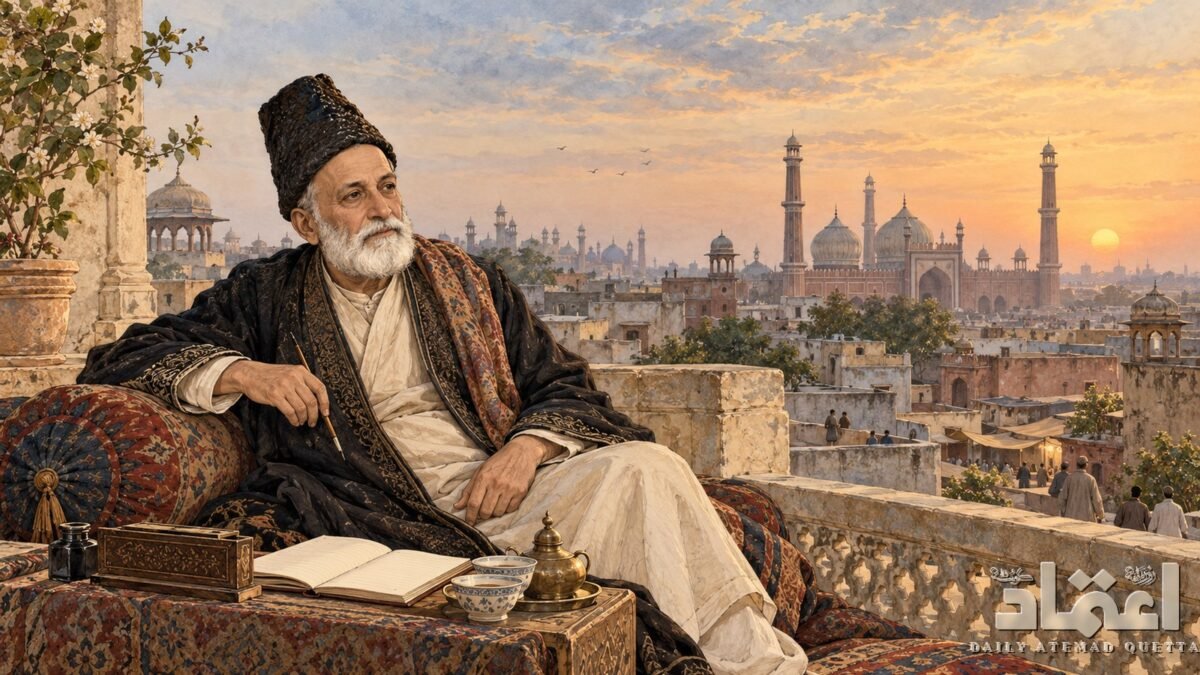
If all readers of Urdu were asked to name one poet, most would probably give the same name: Ghalib. People repeat his verses spontaneously, even when they do not fully grasp the meaning. His letters are still a model of Urdu prose. And his life, which passed through poverty, debt, pension lawsuits and the devastation of 1857, is a story in itself. Ghalib is the poet of a Delhi where the Mughal dynasty was in its evening and British rule was dawning. He was fully aware of his own worth:
There are many other fine poets in the worldThey say Ghalib’s way of saying it is different
Life and times
Mirza Asadullah Baig Khan, who wrote first under the pen name Asad and then Ghalib, was born in Agra on 27 December 1797. His father, Abdullah Baig Khan, was killed in a battle around 1802, when Ghalib was still a child. He was raised under the care of his uncle, Nasrullah Baig Khan, who also died soon after. The family lived on a pension from the British government fixed for the uncle’s services. The dispute over the amount and share of that pension became a long chapter of Ghalib’s life.
At the age of 13, in 1810, he married Umrao Begum and moved to Delhi, which remained his city for the rest of his life. In 1826 he set out for Calcutta to pursue the pension case and returned about three years later. The case failed, but the journey left a deep mark on his mind.
Ghalib considered his Persian poetry superior to his Urdu, and spent much of his life writing in Persian. In 1850 Bahadur Shah Zafar commissioned him to write the history of the Timurid dynasty and conferred on him the titles Najmud Daula and Dabirul Mulk. After the death of Zauq in 1854 he also became the king’s poetry tutor. But this high point was brief. The uprising of 1857 and the harshness of the British that followed laid Delhi waste. Ghalib recorded those months in his Persian diary “Dastanbuy”, and in his Urdu letters told friends how people he knew were killed, neighbourhoods emptied and the city became a graveyard.
In his last years the stipends of the Nawabs of Rampur, Yusuf Ali Khan and then Kalb Ali Khan, supported him. His Urdu letters were published in his lifetime in two collections, “Ud-e-Hindi” (1868) and “Urdu-e-Mualla” (1869). Ghalib died in Delhi on 15 February 1869 and was buried in Basti Nizamuddin. His pupil Altaf Hussain Hali wrote “Yadgar-e-Ghalib” in 1897, which remains the basic source on his life and work.
Style
Ghalib’s ghazal is very different from the simplicity of Mir. It has complexity of thought, philosophical questions and a heavy use of Persian compounds. Early on he was accused of “favouring difficulty”, and he himself later removed many of his early verses from his divan. But in his best verses, difficult ideas and easy language come together:
Thousands of desires, each worth dying forMany of my wishes were fulfilled, yet too few
Ghalib’s other great quality is his irony and playfulness. He laughs at himself and also pokes fun at the ascetic and the preacher:
I know the reality of paradise, butGhalib, it is a pleasant thought to keep the heart happy
Selected verses
When nothing existed, God existed; had nothing existed, God would haveMy being drowned me; had I not been, what would there be?
Ghalib died long ago, yet I recallHow he said at every turn, “If it were so, what then?”
The world is a children’s playground before meNight and day a spectacle unfolds before me
It is a heart, not stone or brick; why should it not fill with pain?I will weep a thousand times; why should anyone torment me?
Love cannot be commanded; it is a fire, GhalibThat cannot be lit at will nor put out at will
The glow that comes to my face at the sight of herShe takes to mean the patient is well
I accept that you will not be neglectful, butI will be dust by the time you learn of it
A sigh needs a lifetime to take effectWho lives until your tresses are tamed?
At every word you say, “Who are you?”You tell me: what manner of speaking is this?
I do not believe in blood merely running through the veinsIf it does not drip from the eye, what is blood?
With what face will you go to the Kaaba, Ghalib?Have you no shame?
Explaining the verses
«When nothing existed, God existed…» When there was nothing, God was there, and had nothing existed, God would still be. My own being has brought me trouble. Had I not been, what would it matter? What would have been lost?
«Ghalib died long ago, yet I recall…» A long time has passed since Ghalib died, but one recalls his habit of saying at every turn, “If it were so, what then?” The poet imagines his own death and smiles at one of his own habits.
«The world is a children’s playground before me…» This world is like a children’s game in front of me. A spectacle goes on night and day, and I keep watching.
«It is a heart, not stone or brick…» It is a heart, not stone or brick, so it fills with pain. I will weep a thousand times, but why does anyone torment me at all?
«Love cannot be commanded…» No one has control over love. It is a fire that cannot be lit by trying and cannot be put out by trying.
«The glow that comes to my face at the sight of her…» The glow that comes to the lover’s face on seeing the beloved is taken by her as health. She does not know that the glow is due to her.
«I accept that you will not be neglectful…» Granted that you will not neglect me, but by the time you learn of my state I will have turned to dust.
«A sigh needs a lifetime to take effect…» A plea takes a lifetime to have effect, and who lives until your tresses are tamed? That is, success in love takes longer than a human life.
«At every word you say, “Who are you?”…» You say to me at every word, “Who are you?” Tell me yourself, what way of speaking is this? Playfulness even in complaint is Ghalib’s special touch.
«I do not believe in blood merely running through the veins…» For us, blood running through the veins is nothing. Blood that does not fall from the eye as a tear, what kind of blood is that?
«With what face will you go to the Kaaba, Ghalib?…» Ghalib, with what face will you go to the Kaaba? But you have no shame. This conversation with himself is an example of Ghalib’s self-knowledge and of laughing at himself.
Influence and legacy
After Ghalib’s death his fame did not fade but kept growing. Hali’s “Yadgar-e-Ghalib” shaped his portrait, and in the 20th century more was written about him than about any other Urdu poet. Commentaries on his divan were written, his letters came to be regarded as a model of simplicity and informality in Urdu prose, and novels, plays and films were made about his life.
Today his house in Ballimaran, Delhi, is a memorial, several scholarly editions of his work have been published, and his complete divan with commentary is available on Rekhta. One thing should be remembered: many verses circulating on social media under Ghalib’s name are not in his divan. Whether a verse is Ghalib’s can be decided only by the Divan-e-Ghalib.
To readers: Which verse of Ghalib comes to your lips most often? Write to us. Selected verses will be published with your name.
Next Friday: Nazir Akbarabadi, the poet of the bazaar and the fair, who made the common man a subject of Urdu verse.
Sources
- Rekhta, Mirza Ghalib: poetry and introduction. https://www.rekhta.org/poets/mirza-ghalib?lang=ur
- Altaf Hussain Hali, Yadgar-e-Ghalib, Kanpur, 1897 (several new editions, for example Majlis-e-Taraqqi-e-Adab, Lahore).
- Ralph Russell and Khurshidul Islam, Ghalib 1797–1869, Volume I: Life and Letters, George Allen & Unwin, London, 1969 (reissued Oxford University Press, 1994).
- Frances W. Pritchett, A Desertful of Roses: The Urdu Ghazals of Mirza Asadullah Khan Ghalib, Columbia University (complete divan with text, variants and commentary). https://www.columbia.edu/itc/mealac/pritchett/00ghalib/
- Mirza Ghalib, Dastanbuy (Persian diary of 1857); English translation: Dastanbuy, trans. Khwaja Ahmad Faruqi, Asia Publishing House, Bombay, 1970.
- Pavan K. Varma, Ghalib: The Man, The Times, Penguin, New Delhi, 1989.
- Muhammad Sadiq, A History of Urdu Literature, 2nd edition, Oxford University Press, Delhi, 1984 (chapter on Ghalib).
 More from E-Magazine
More → Aamer Sohail: the aggressive left-handed opener
 Abd al-Malik ibn Marwan: Arabic offices, new coins and the octagonal domed shrine
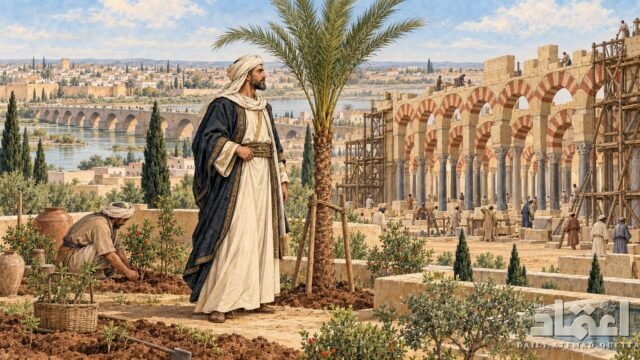 Abd al-Rahman I: the emir who founded Cordoba's Great Mosque
 Abdul Hafeez Kardar: Pakistan cricket's first captain
 Abdul Razzaq: the all-rounder who either blocked or hit
 Abel Tasman: the Dutch voyage that found Tasmania and New Zealand
 Afanasy Nikitin: the Russian merchant who travelled to India
 Ahmad ibn Majid: master navigator of the Indian Ocean