
Momin Khan Momin: the physician poet of Ghalib’s Delhi
In Delhi in the first half of the 19th century, Mughal rule had shrunk to the walls of the Red Fort, yet its literary gatherings are remembered even today.
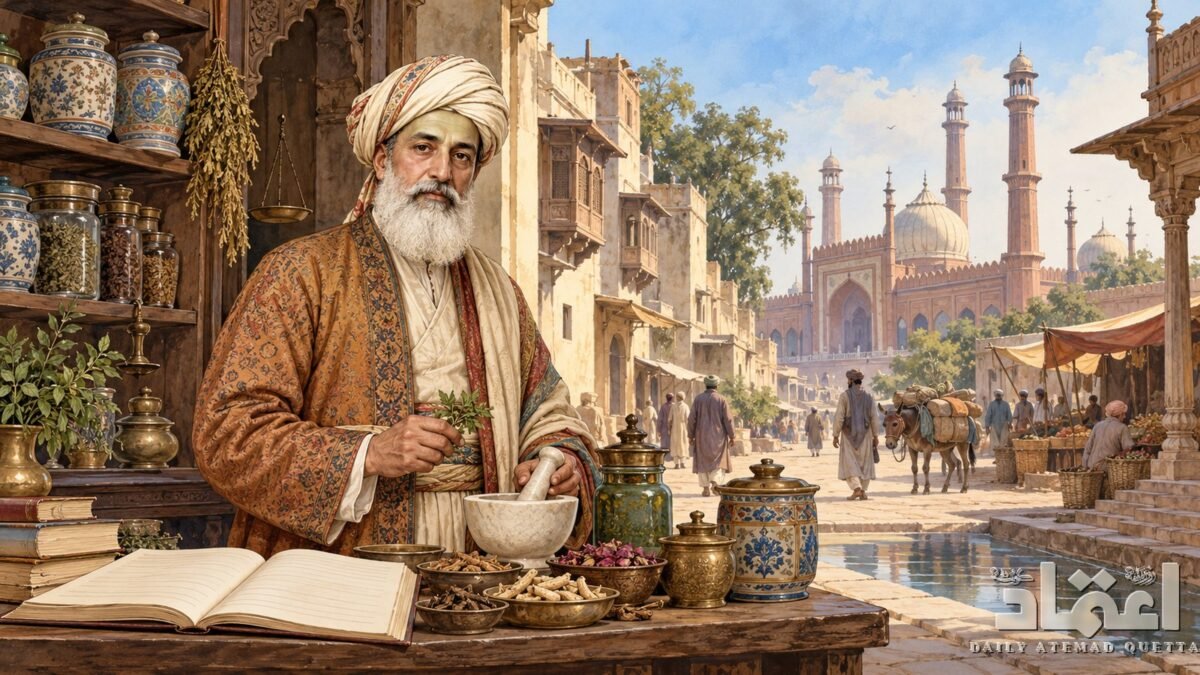
In Delhi in the first half of the nineteenth century, Mughal rule had shrunk to the walls of the Red Fort. Yet the gatherings of poetry and literature were so brilliant that they are still talked about today. Ghalib was in that Delhi, and so was Zauq. So was a hakim who took pulses, cast horoscopes, played chess and composed ghazals that left listeners astonished. He was Momin Khan Momin. One of his couplets is among the best-known examples of the Urdu ghazal:
You are with me, as it were,When there is no one else with me
When no one else is with me, it is as if you are with me. In solitude, the memory of the beloved becomes his presence. According to tradition, Ghalib once said that Momin could give him this couplet and take his entire diwan in exchange. There is no written proof of this tradition, but it shows the rank the people of Delhi gave the couplet.
Life and times
According to Rekhta, Momin’s real name was Muhammad Momin, and he came from a Kashmiri family. His grandfather, Hakim Madar Khan, came to Delhi in the time of Shah Alam and joined the royal physicians. Momin was born in 1800 or 1801 in Kucha Chelan, Delhi. The jagir granted to the family by the emperor had been confiscated. In its place the family received a pension of Rs1,000 a year, which, according to Rekhta, was not paid in full. His Persian letters contain complaints about it.
The household was religious and had close ties with the family of Shah Abdul Aziz. Momin studied Arabic under Shah Abdul Qadir Dehlvi. Medicine was the family profession, but his interests went far beyond it: astrology, geomancy, mathematics, chess and music. He began writing poetry in his youth and took guidance from Shah Naseer, but soon developed a style of his own.
According to Rekhta, in 1818 he pledged allegiance at the hand of Syed Ahmad Barelvi, although he did not himself take part in the jihad movement. There was a certain indifference in his nature. The nawabs of several states wanted to invite him, but he never left Delhi. He also declined a professorship at Delhi College. Seven of his nine qasidas are religious. His second marriage was into the family of Khwaja Mir Dard, so he has a family link with the poet of last Friday.
In the last years of his life he withdrew from romantic pursuits. According to Rekhta, in 1851 he fell from a roof and was badly injured. He died a few months later, on 14 May 1852.
Style
Momin’s ghazal is known for its delicacy and complexity. He does not say things directly. He makes a hint and lets the listener reach the meaning on his own. His love is not for an imaginary figure but for a living person, and her complaints, her sulking and being coaxed back, and the rival’s jealousy all appear in his ghazal. His kulliyat contains six masnavis, and according to Rekhta each of them describes a love affair.
But this love is never vulgar. According to Rekhta’s introduction, Momin showed that even the outward themes of love can be expressed with refinement and dignity. His playfulness carries a light touch of irony:
Ulte vo shikve karte hain aur kis ada ke saathBe-taqati ke taane hain uzr-e-jafa ke saath
She does the wrong and then, in turn, she is the one who complains, and with what style! She taunts me for my weakness and uses it as an excuse for her cruelty.
The conflict between faith and love also comes up again and again in his work, often with a note of laughing at himself:
Umr saari to kati ishq-e-butaan mein MominAakhri waqt mein kya khaak musalmaan honge
Selected verse
Vo jo ham mein tum mein qaraar tha tumhein yaad ho ke na yaad hoWahi yaani wada nibaah ka tumhein yaad ho ke na yaad ho
Kabhi ham mein tum mein bhi chaah thi kabhi ham se tum se bhi raah thiKabhi ham bhi tum bhi the aashna tumhein yaad ho ke na yaad ho
Tum hamare kisi tarah na hueWarna duniya mein kya nahin hota
Kyun sune arz-e-muztar MominSanam aakhir khuda nahin hota
Thi wasl mein bhi fikr-e-judai tamam shabWoh aaye to bhi neend na aayi tamam shab
Bahr-e-iyadat aaye woh lekin qaza ke saathDam hi nikal gaya mera aawaz-e-pa ke saath
Thaani thi dil mein ab na milenge kisi se hamPar kya karein ke ho gaye nachaar jee se ham
Kya dil ko le gaya koi begana aashnaKyun apne jee ko lagte hain kuchh ajnabi se ham
Roya karenge aap bhi pahron isi tarahAtka kahin jo aap ka dil bhi meri tarah
Lagti hain gaaliyan bhi tere munh se kya bhaliQurban tere phir mujhe kah le isi tarah
Explanation of the couplets
“Vo jo ham mein tum mein qaraar tha tumhein yaad ho ke na yaad ho…” The pledge between you and me, the promise to stay together, you may remember it or you may not. The faint reproach in the refrain “tumhein yaad ho ke na yaad ho” still draws the reader in.
“Kabhi ham mein tum mein bhi chaah thi kabhi ham se tum se bhi raah thi…” There was once love between us, and we used to visit each other. We knew each other. The repetition of similar short words builds a chain of memories.
“Tum hamare kisi tarah na hue…” Everything impossible becomes possible in the world. Only you could not become mine in any way. It is a simple couplet with the longing of a whole life in it.
“Kyun sune arz-e-muztar Momin…” Why should she hear the plea of restless Momin? After all, an idol is not God, to listen to prayer. There is playfulness in it, and a taunt at the beloved.
“Thi wasl mein bhi fikr-e-judai tamam shab…” Even on the night of meeting, the worry of separation lasted. When she came, I still could not sleep all night. Earlier he stayed awake in separation, now in union as well.
“Bahr-e-iyadat aaye woh lekin qaza ke saath…” She came to visit the sick, but she brought death with her. The moment I heard the sound of her footsteps, my breath left me. The intensity of joy itself took his life.
“Thaani thi dil mein ab na milenge kisi se ham…” I had firmly resolved in my heart that I would not get close to anyone again. But what can I do? I was helpless against my own heart.
“Kya dil ko le gaya koi begana aashna…” Has someone who is both a stranger and an acquaintance taken my heart? Now even I seem a little strange to myself.
“Roya karenge aap bhi pahron isi tarah…” Today you laugh at my weeping. The day your heart gets caught somewhere, you too will weep for hours in the same way.
“Lagti hain gaaliyan bhi tere munh se kya bhali…” Even abuse sounds sweet from your lips. I am devoted to you, so say it once more in the same way. The ease of Delhi’s everyday speech can be heard clearly in this couplet.
Influence and legacy
In his lifetime Momin was regarded as an equal of Ghalib and Zauq. According to Rekhta’s introduction, critics agree that he had command of the qasida, the masnavi and the ghazal alike, although his real greatness rests on the ghazal. His ghazal taught later poets that the everyday matters of love, sulking, complaint, promise and waiting, could be expressed with refinement and could also carry many layers of meaning. Rekhta lists Mir Taskeen Dehlvi among his pupils.
Lines such as “Vo jo ham mein tum mein qaraar tha” and “Tum mere paas hote ho goya” are still remembered by Urdu readers, often in such a way that the person repeating them does not even know the poet’s name.
From readers: Which of Momin’s couplets have you recited to remind someone of something? Write and tell us. Selected couplets will be published with your name on next Friday’s page.
Next Friday: Sheikh Ibrahim Zauq, the teacher of Bahadur Shah Zafar and the poet of Delhi’s standard idiom.
Sources
- Rekhta, Momin Khan Momin: profile. https://www.rekhta.org/poets/momin-khan-momin/profile?lang=ur
- Rekhta, Momin’s ghazals (couplets in this instalment are from these pages): https://www.rekhta.org/ghazals/asar-us-ko-zaraa-nahiin-hotaa-momin-khan-momin-ghazals?lang=ur ; https://www.rekhta.org/ghazals/vo-jo-ham-men-tum-men-qaraar-thaa-tumhen-yaad-ho-ki-na-yaad-ho-momin-khan-momin-ghazals?lang=ur ; https://www.rekhta.org/ghazals/ulte-vo-shikve-karte-hain-aur-kis-adaa-ke-saath-momin-khan-momin-ghazals?lang=ur ; https://www.rekhta.org/ghazals/dafn-jab-khaak-men-ham-sokhta-saamaan-honge-momin-khan-momin-ghazals?lang=ur ; https://www.rekhta.org/ghazals/thii-vasl-men-bhii-fikr-e-judaaii-tamaam-shab-momin-khan-momin-ghazals?lang=ur ; https://www.rekhta.org/ghazals/thaanii-thii-dil-men-ab-na-milenge-kisii-se-ham-momin-khan-momin-ghazals?lang=ur ; https://www.rekhta.org/ghazals/royaa-karenge-aap-bhii-pahron-isii-tarah-momin-khan-momin-ghazals?lang=ur
- Muhammad Husain Azad, Ab-e-Hayat, Lahore, 1880, fifth period (account of Momin).
- Ram Babu Saksena, A History of Urdu Literature, Ram Narain Lal, Allahabad, 1927 (chapter on Momin).
- Muhammad Sadiq, A History of Urdu Literature, 2nd edition, Oxford University Press, Delhi, 1984.
 More from E-Magazine
More → Aamer Sohail: the aggressive left-handed opener
 Abd al-Malik ibn Marwan: Arabic offices, new coins and the octagonal domed shrine
 Abd al-Rahman I: the emir who founded Cordoba's Great Mosque
 Abdul Hafeez Kardar: Pakistan cricket's first captain
 Abdul Razzaq: the all-rounder who either blocked or hit
 Abel Tasman: the Dutch voyage that found Tasmania and New Zealand
 Afanasy Nikitin: the Russian merchant who travelled to India
 Ahmad ibn Majid: master navigator of the Indian Ocean