
Khwaja Mir Dard: the poet of Sufi ghazal
In 18th-century Delhi, when great poets left for noble patrons, Khwaja Mir Dard stayed in his khanqah and wrote few but deeply felt verses.
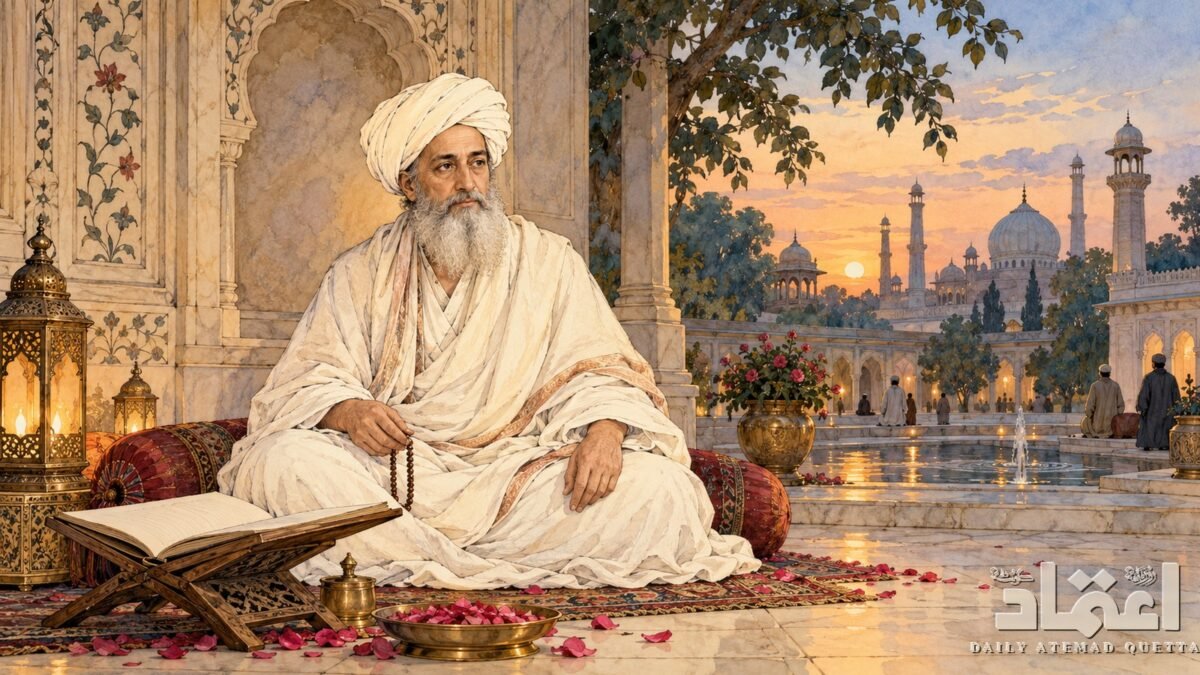
In 18th-century Delhi, every major poet was leaving the city in search of a nawab’s patronage. One poet turned neither to the court nor to Lucknow. He stayed in his khanqah, held gatherings of music, and went on writing few verses, but very deep ones. This was Khwaja Mir Dard, whom Urdu calls the master of Sufi ghazal. In his poetry the world is an inn where all are guests:
Madrasa ya dair tha ya Kaaba ya but-khana thaHum sabhi mehmaan thay wahan tu hi sahib-khana tha
Life and times
According to Rekhta, Khwaja Mir Dard was born in Delhi in 1721. His family was among the respected Sufi families of the city. His father, Khwaja Muhammad Nasir Andalib, was himself a poet and a elder of the Naqshbandi order. Historians say he founded a spiritual order of his own called “Tariqa-e-Muhammadiya”. Dard received his education and spiritual training from him, and took over the seat of the khanqah after his father.
Dard’s youth and old age were both spent in the years of Delhi’s ruin. The invasion of Nadir Shah, the raids of Ahmad Shah Abdali and the plunder of the Marathas all happened before his eyes. Poets such as Mir and Sauda went to Lucknow and Farrukhabad in search of livelihood and peace. According to Muhammad Hussain Azad and later historians, Dard did not leave Delhi. He never joined the court of any noble. Rekhta records his statement that he “never praised anyone, never wrote satire, and never composed verse on request”.
Azad reports that a gathering of music was held every month in his khanqah, attended by the leading singers of Delhi. According to Rekhta, Dard was himself an expert in music, and this musical quality can be heard in his verse as well. He composed only when verse itself made him speak, so his Urdu diwan is very short. Besides Urdu, he also wrote Persian poetry and prose on Sufism, of which “Ilm-ul-Kitab” is the best known. According to Rekhta, he died in Delhi on 7 January 1785.
Style
Dard is often dismissed simply as a “Sufi poet”, but Rekhta’s profile rightly reminds readers that this label was attached to him later. His contemporary Mir Taqi Mir, who did not readily admire anyone, called him a “powerful” poet of Rekhta. In Dard there is both earthly and divine love, and often the border between the two disappears.
His greatest theme is the oneness of God: one manifestation everywhere, and the human heart as the place that can hold what earth and heaven cannot:
Arz o sama kahan teri wusat ko pa sakeMera hi dil hai woh ke jahan tu sama sake
How can earth and heaven reach Your vastness? It is only my heart in which You can fit. Dard has cast a well-known Sufi tradition into one clear verse.
Dard’s language is simple, his metres flowing and often short. In his verse nothing is spelled out in full; something is left unsaid, and that adds to the effect:
Jag mein aa kar idhar udhar dekhaTu hi aaya nazar jidhar dekha
Selected verses
Tohmat-e-chand apne zimme dhar chaleJis liye aaye thay so hum kar chale
Zindagi hai ya koi toofan haiHum to is jeene ke hathon mar chale
Dosto dekha tamasha yahan ka sabTum raho khush hum to apne ghar chale
Waye nadani ke waqt-e-marg yeh sabit huaKhwab tha jo kuch ke dekha jo suna afsana tha
Teri gali mein main na chaloon aur saba chaleYunhi khuda jo chahe to bande ki kya chale
Bagh-e-jahan ke gul hain ya khaar hain to hum hainGar yaar hain to hum hain aghyar hain to hum hain
Wabasta hai humein se gar jabr hai o gar qadarMajboor hain to hum hain mukhtar hain to hum hain
Mujhe dar se apne tu taale hai yeh bata mujhe tu kahan nahinKoi aur bhi hai tere siwa tu agar nahin to jahan nahin
Mere dil ke sheeshe ko bewafa tu ne tukde tukde hi kar diyaMere paas to wohi ek tha yahan dukan-e-sheesha-garan nahin
Itfa-e-nar-e-ishq na ho aab-e-ashk seYeh aag woh nahin jise pani bujha sake
Tujhi ko jo yahan jalwa-farma na dekhaBarabar hai duniya ko dekha na dekha
Explanation of the verses
“Tohmat-e-chand apne zimme dhar chale…” We leave the world taking a few accusations upon ourselves; we have done what we came to do. Hardly anyone has accounted for a life with such ironic humility.
“Zindagi hai ya koi toofan hai…” Is this life or some storm? We died of the toil of living itself. It is not fear of death but a statement of the weariness of living.
“Dosto dekha tamasha yahan ka sab…” Friends, we have seen all the spectacle here; you stay happy, we are going to our real home. For the Sufi, this world is not home; the real home is elsewhere.
“Waye nadani ke waqt-e-marg yeh sabit hua…” Alas for our folly, that at the time of death it became clear: what we saw was a dream and what we heard was a tale. A very famous Urdu verse on the transience of the world.
“Teri gali mein main na chaloon aur saba chale…” The morning breeze may go to your street and I may not; if this is God’s will, what power does a servant have? The two meanings of “chale”, to walk and to prevail, are the soul of this verse.
“Bagh-e-jahan ke gul hain ya khaar hain to hum hain…” In the garden of this world, we are both the flowers and the thorns, both friend and stranger. That is, all multiplicity is a form of one reality.
“Wabasta hai humein se gar jabr hai o gar qadar…” The old philosophical question of compulsion and free will, whether man is bound or free, Dard gathers into one line: both are tied to us.
“Mujhe dar se apne tu taale hai yeh bata mujhe tu kahan nahin…” You turn me away from your door, but tell me, where are You not? There is no one but You; if You were not, there would be no world. Where could I go?
“Mere dil ke sheeshe ko bewafa tu ne tukde tukde hi kar diya…” O faithless one, you have shattered my glass-like heart; it was the only one I had, and I am no glass-seller who can bring another.
“Itfa-e-nar-e-ishq na ho aab-e-ashk se…” The fire of love is not put out by the water of tears; it is not the kind of fire that water can quench.
“Tujhi ko jo yahan jalwa-farma na dekha…” If I did not see You alone manifest here, then seeing the world or not seeing it is the same.
Influence and legacy
Dard gave Urdu ghazal a seriousness and depth that had earlier been considered the preserve of Persian Sufi poets. According to Rekhta’s profile, Abdus Salam Nadvi wrote that Dard was the first to acquaint Urdu with Sufi thought, and in the view of Imdad Imam Asar, no one in Urdu surpasses him in matters of Sufism. His short diwan is proof that a poet’s standing is not made by the number of his verses.
The themes of annihilation, transience and oneness that later became common in Urdu ghazal have one major root in Dard’s verse.
To readers: Which of Dard’s verses seemed to you the truest word about life? Write and send it to us. Selected verses will be published with your name on next Friday’s page.
Next Friday: Momin Khan Momin, the physician poet of Ghalib’s Delhi, about whom the story is famous that Ghalib offered to give away his own diwan for one of his verses.
Sources
- Rekhta, Khwaja Mir Dard: profile. https://www.rekhta.org/poets/khwaja-meer-dard/profile?lang=ur
- Rekhta, ghazals of Khwaja Mir Dard (the verses in this instalment are from these pages): https://www.rekhta.org/ghazals/madrasa-yaa-dair-thaa-yaa-kaaba-yaa-but-khaana-thaa-khwaja-meer-dard-ghazals?lang=ur ; https://www.rekhta.org/ghazals/arz-o-samaa-kahaan-tirii-vusat-ko-paa-sake-khwaja-meer-dard-ghazals?lang=ur ; https://www.rekhta.org/ghazals/jag-men-aa-kar-idhar-udhar-dekhaa-khwaja-meer-dard-ghazals?lang=ur ; https://www.rekhta.org/ghazals/tohmat-e-chand-apne-zimme-dhar-chale-khwaja-meer-dard-ghazals-3?lang=ur ; https://www.rekhta.org/ghazals/terii-galii-men-main-na-chaluun-aur-sabaa-chale-khwaja-meer-dard-ghazals?lang=ur ; https://www.rekhta.org/ghazals/baag-e-jahaan-ke-gul-hain-yaa-khaar-hain-to-ham-hain-khwaja-meer-dard-ghazals?lang=ur ; https://www.rekhta.org/ghazals/mujhe-dar-se-apne-tuu-taale-hai-ye-bataa-mujhe-tuu-kahaan-nahiin-khwaja-meer-dard-ghazals?lang=ur ; https://www.rekhta.org/ghazals/tujhii-ko-jo-yaan-jalva-farmaa-na-dekhaa-khwaja-meer-dard-ghazals?lang=ur
- Muhammad Hussain Azad, Ab-e-Hayat, Lahore, 1880, third period (account of Dard).
- Jamil Jalibi, Tareekh-e-Adab-e-Urdu, vol. 2, Majlis-e-Taraqqi-e-Adab, Lahore (chapter on Dard).
- Ram Babu Saksena, A History of Urdu Literature, Ram Narain Lal, Allahabad, 1927 (chapter on Dard).
- Muhammad Sadiq, A History of Urdu Literature, 2nd edition, Oxford University Press, Delhi, 1984.
 More from E-Magazine
More → Aamer Sohail: the aggressive left-handed opener
 Abd al-Malik ibn Marwan: Arabic offices, new coins and the octagonal domed shrine
 Abd al-Rahman I: the emir who founded Cordoba's Great Mosque
 Abdul Hafeez Kardar: Pakistan cricket's first captain
 Abdul Razzaq: the all-rounder who either blocked or hit
 Abel Tasman: the Dutch voyage that found Tasmania and New Zealand
 Afanasy Nikitin: the Russian merchant who travelled to India
 Ahmad ibn Majid: master navigator of the Indian Ocean