
Hasrat Mohani: the poet of the ghazal and of freedom
Few Urdu poets have lived a life more interesting than their verse. Hasrat Mohani, whose ghazal "Chupke chupke raat din" is known across the subcontinent, was one.
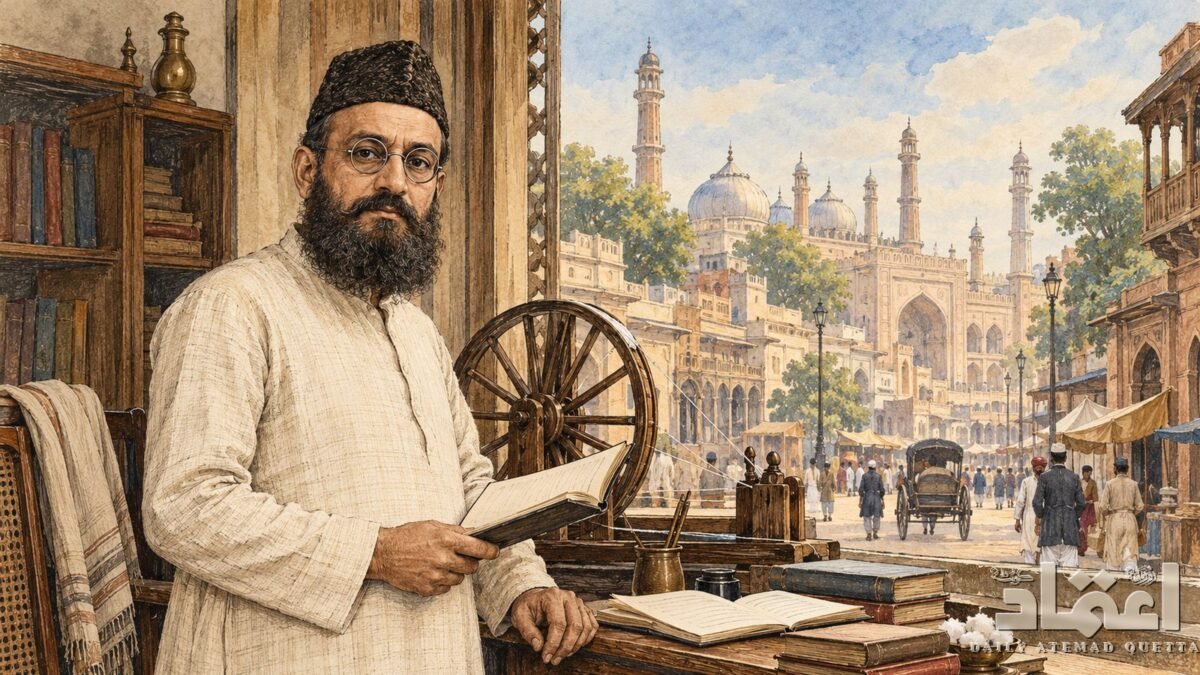
Few Urdu poets have lived a life more interesting than their poetry. Hasrat Mohani was one of them. He was a ghazal poet whose ghazal “Chupke chupke raat din aansu bahana yaad hai” was heard in every home in the subcontinent. He was a journalist whom the British government repeatedly sent to jail. He was the first Indian politician to demand complete independence at a Congress session. He was among the founders of the Communist Party, and also a practising Muslim who prayed and fasted regularly and went on Haj several times.
Life and times
Syed Fazlul Hasan, who wrote under the pen name Hasrat, was born on 1 January 1878 in Mohan, a town in Unnao district of Awadh, according to Rekhta. He was known as Mohani after the town. He received his early education at home and in the town. In the late 1890s he entered the Muhammadan Anglo-Oriental College at Aligarh. At Aligarh he was prominent in poetry, politics and debates. He was once expelled after a clash with the college administration. He took his BA in 1903.
The same year he launched the literary magazine “Urdu-e-Mualla” from Aligarh. It is counted among the important Urdu literary journals. In it he published selected verse of older poets and critical essays. But the magazine did not remain purely literary. In 1908 he published an article on British education policy in Egypt and was sentenced to two years’ rigorous imprisonment on a charge of sedition. In jail he had to grind grain at the hand mill, and his couplet on that experience is still remembered today. It was the first of many imprisonments in his life.
In politics Hasrat first supported the Swadeshi movement and himself ran a cloth shop. In December 1921, at the Congress session in Ahmedabad, he moved a resolution for complete independence. It was not passed at the time, but it is remembered in history as the first such demand. In 1925 he was chairman of the reception committee of the Communist conference in Kanpur, and so he is counted among the founders of the Communist Party in India. After independence he was a member of India’s Constituent Assembly but refused to sign the constitution. He died in Lucknow on 13 May 1951.
He went on Haj several times in his life.
Style
Hasrat revived the ghazal tradition that came down from Mir and Momin, and over which purposeful poetry had gained dominance in the time of Hali and Iqbal. In his ghazal love is an earthly and decent emotion, neither very philosophical nor very colourful. He himself said his style was that of “muamla bandi”, that is, describing the small dealings between lover and beloved, but with purity:
دیکھنا بھی تو انہیں دور سے دیکھا کرناشیوۂ عشق نہیں حسن کو رسوا کرنا
His language is clear and fluent, his words are simple and his tone is refined. There is playfulness in his verse but no vulgarity. He also has couplets in which prison, the hand mill and struggle enter poetry, perhaps for the first time in the Urdu ghazal with such ease. An example is given below in the selected verse.
Selected verse
چپکے چپکے رات دن آنسو بہانا یاد ہےہم کو اب تک عاشقی کا وہ زمانا یاد ہے
نہیں آتی تو یاد ان کی مہینوں تک نہیں آتیمگر جب یاد آتے ہیں تو اکثر یاد آتے ہیں
خرد کا نام جنوں پڑ گیا جنوں کا خردجو چاہے آپ کا حسنِ کرشمہ ساز کرے
حسنِ بے پروا کو خود بین و خود آرا کر دیاکیا کیا میں نے کہ اظہارِ تمنا کر دیا
ہے مشقِ سخن جاری چکی کی مشقت بھیاک طرفہ تماشا ہے حسرت کی طبیعت بھی
Meaning of the couplets
“Chupke chupke raat din aansu bahana yaad hai…” I remember weeping in secret night and day. I still remember that time of love. This ghazal has also been sung a great deal and is counted among the best-known ghazals of the subcontinent.
“Nahin aati to yaad un ki mahinon tak nahin aati…” Their memory does not come for months, but when it comes, it comes again and again. It is a truth in everyday language that every reader feels is their own.
“Khirad ka naam junoon pad gaya junoon ka khirad…” Reason came to be called madness and madness reason. Let your beauty, the maker of wonders, do as it pleases. Before the beloved, the definitions of reason and madness change.
“Husn-e-be-parwa ko khud-bin o khud-ara kar diya…” I expressed my desire and made a beauty that cared nothing for me vain about its own looks. What have I done?
“Hai mashq-e-sukhan jari chakki ki mashaqqat bhi…” The labour of the hand mill in jail goes on, and so does the practice of poetry. Hasrat’s temperament is a strange spectacle. The couplet recalls his first imprisonment (1908) and is among the early examples of Urdu political poetry.
Influence and legacy
Hasrat Mohani is remembered in Urdu literary history for two reasons. First, he kept the ghazal alive in the twentieth century when the nazm dominated, and later ghazal poets acknowledged him as a leader of that revival. In “Urdu-e-Mualla” he brought the verse of older poets, especially Momin and his contemporaries, to a new generation and wrote critical comments on them that are counted among the early examples of Urdu criticism.
The second reason is his life. A ghazal poet who grinds grain in jail, demands independence, forms a workers’ party and also performs Haj several times is an example who fits no category. A postage stamp was issued in his name in India, and his ghazals are still sung and heard today.
To readers: Which of Hasrat’s couplets do you like best? Write to us. Selected couplets will be published with your name.
Next Friday: Dagh Dehlvi, whose sweetness of language remains the hallmark of Urdu to this day.
Sources
- Rekhta, Hasrat Mohani: verse and introduction. https://www.rekhta.org/poets/hasrat-mohani?lang=ur ; profile (date of birth): https://www.rekhta.org/poets/hasrat-mohani/profile ; text of couplets: https://www.rekhta.org/ghazals/chupke-chupke-raat-din-aansuu-bahaanaa-yaad-hai-hasrat-mohani-ghazals ; https://www.rekhta.org/ghazals/dekhnaa-bhii-to-unhen-duur-se-dekhaa-karnaa-hasrat-mohani-ghazals ; https://www.rekhta.org/ghazals/husn-e-be-parvaa-ko-khud-biin-o-khud-aaraa-kar-diyaa-hasrat-mohani-ghazals ; https://www.rekhta.org/poets/hasrat-mohani/couplets (Nahin aati to yaad…, Khirad ka naam…, Hai mashq-e-sukhan…)
- Ram Babu Saksena, A History of Urdu Literature, Ram Narain Lal, Allahabad, 1927 (section on Hasrat Mohani).
- Muhammad Sadiq, A History of Urdu Literature, 2nd edition, Oxford University Press, Delhi, 1984 (chapter on Hasrat).
- Hasrat Mohani, “Yaad aate hain” (text of the ghazal and introduction). https://urdushahkar.org/yaad-aate-hain-hasrat-mohani/
- Rekhta, article: Hasrat Mohani and Firaq Gorakhpuri. https://www.rekhta.org/articles/hasrat-mohaani-firaq-gorakhpuri-articles
 More from E-Magazine
More → Aamer Sohail: the aggressive left-handed opener
 Abd al-Malik ibn Marwan: Arabic offices, new coins and the octagonal domed shrine
 Abd al-Rahman I: the emir who founded Cordoba's Great Mosque
 Abdul Hafeez Kardar: Pakistan cricket's first captain
 Abdul Razzaq: the all-rounder who either blocked or hit
 Abel Tasman: the Dutch voyage that found Tasmania and New Zealand
 Afanasy Nikitin: the Russian merchant who travelled to India
 Ahmad ibn Majid: master navigator of the Indian Ocean