
Washington seminar urges Pakistan-US ties to move beyond security to economic partnership

WASHINGTON: A seminar titled “From Security to Prosperity: A New Era in Pakistan-US Relations” was held at the Truman Center in the United States. Participants stressed the need to move forward on the basis of shared interests rather than the past.
Former diplomats, academics and defence experts attended the seminar. They included Pakistan’s former ambassador Sardar Masood Khan and Munir Akram, Pakistan’s former permanent representative to the United Nations. Robin Raphel, a former US diplomat, Colonel David Smith, a defence expert, and other experts also took part.
The seminar discussed Pakistan-US relations, diplomacy, regional stability, trade, investment, defence cooperation and the changing global order. Participants urged that relations be taken out of the context of the past and built on shared interests for the future.
Robin Raphel and other experts
Robin Raphel said Pakistan was an important country for the United States because of its geographical position, natural resources, young population and diplomatic influence. She said the two countries must strengthen institutional cooperation to make relations lasting.
She stressed the need to explore opportunities for American investment in Pakistan and to link American investors with Pakistani business partners. She said a strong diplomatic presence in South Asia could help reduce regional tension and rivalries. She said the people of the two countries shared values in areas such as family values, children’s education and social service.
Colonel David Smith said relations should be widened to other areas instead of being limited to defence and security. According to him, one reason for past misunderstandings was a failure to understand history, culture and social realities correctly. He stressed public contacts and an understanding of ground realities to restore and strengthen relations.
Dr Patrick Cronin said there were many opportunities for practical cooperation based on shared interests. According to him, cooperation in critical minerals could bring long-term economic benefits to both countries.
He said US policy should give more attention to South Asia and the Indian Ocean, given their importance. He also highlighted the need for cooperation among the countries concerned to deal with common threats of terrorism.
Pakistani speakers
Sardar Masood Khan said relations must be built according to present realities and future needs rather than the traditional context of the past. He said they should be turned into an independent and broad-based partnership instead of being limited to the context of India or Afghanistan.
According to him, 83 major American companies are working in Pakistan and there is wide scope to promote American investment. There are opportunities for cooperation in critical minerals, renewable energy, agriculture and other sectors.
He stressed the need for a broad economic framework to ease trade and business. He described progress in defence cooperation as welcome. He said Pakistan-US cooperation was needed against the TTP and other terrorist networks.
Munir Akram said ending the threat of terrorism from Afghanistan was Pakistan’s top priority. Pakistan is also playing an active role in diplomatic matters in the Middle East, including Palestine and US-Iran issues. According to him, the aim of Pakistan’s diplomacy is to promote the prospects of cooperation for regional stability and security.
Pakistani diplomat Dr Maryam Saeed stressed moving relations out of the narrow circle of security towards economic cooperation and prosperity. She said Pakistan’s young population, talents and professional skills offered opportunities to American technology and business sectors.
She said the interest of Google, Apple and Meta in Pakistan pointed to new opportunities in technology and investment. She said Pakistan’s economic cooperation with China was not necessarily an obstacle to an economic partnership with the United States. American investors needed to benefit from business opportunities and market potential in Pakistan.
Dr Amna Zia said including women’s representation and the voice of minorities in decision-making in Pakistan was important for lasting stability.
More from World
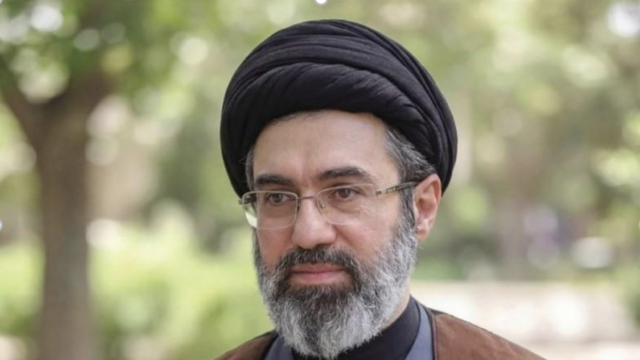
Mojtaba Khamenei meets Mohsen Rezaei on Strait of Hormuz and terms to end war
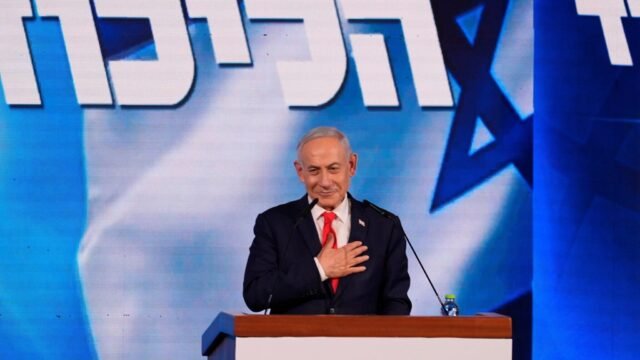
Netanyahu and Eisenkot both claim right to form government after deadlocked Israeli election

US warns Gulf states of possible short, intense campaign against Iran after midterms

UN agencies warn of Ukraine strikes, Iran access gap and Ethiopian refugees in Kenya

Finland and Norway leaders hold rare 90-minute call with Putin on Ukraine war

Iranian speaker says Supreme Leader Mojtaba Khamenei is in full health

Houthis claim they destroyed Saudi military aircraft and hit defence ministry

Centcom rejects Iranian claim of US forces’ withdrawal from Strait of Hormuz

Turkish parliamentary committee approves Makkah joint defence pact

Oil tanker hits mine and catches fire in Strait of Hormuz, Iran claims

Melania Trump says Ukraine-Russia ceasefire expanded within Kherson region
