
Mir Chakar Rind and the Rind–Lashari wars
A look at the Rind–Lashari wars of the 15th and 16th centuries, which are known only through Baloch heroic poetry, not through any contemporary chronicle.
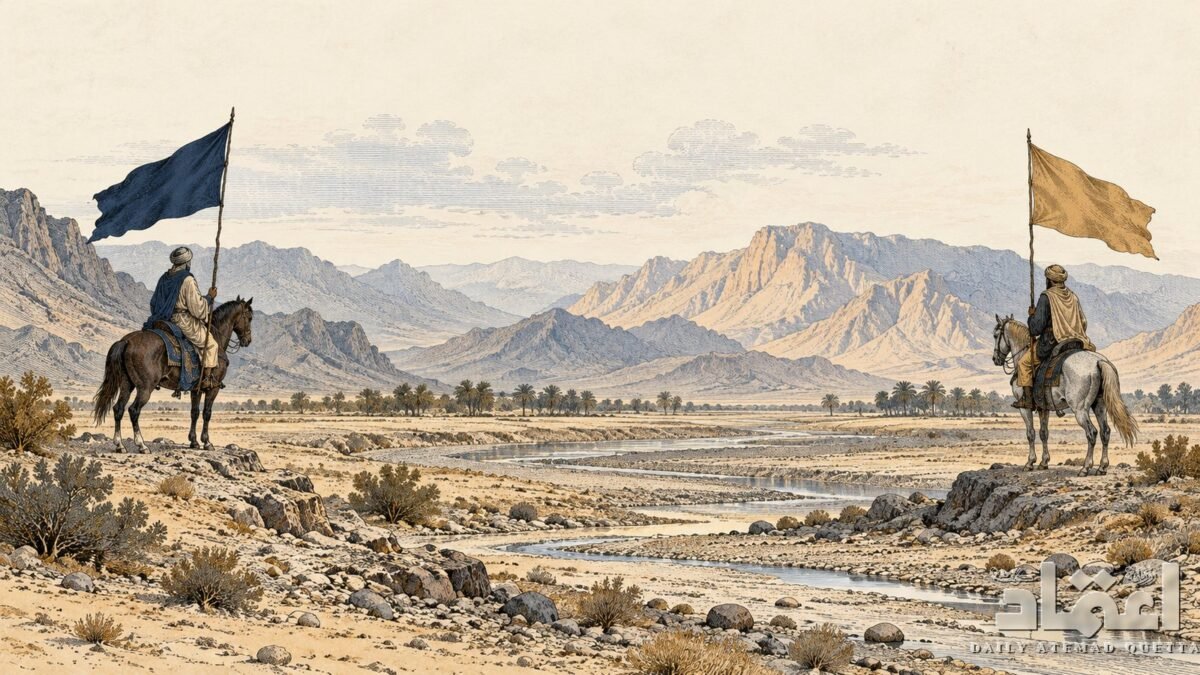
In the previous chapter we looked at the puzzle of the Brahui language, whose arrival has no historical record. The matter of this chapter is also tangled. We have no contemporary chronicle of Balochistan in the 15th and 16th centuries. But we have a whole body of poetry: the heroic verse that preserves the long war between the Rind and Lashari tribes, the names of Mir Chakar Rind and Mir Gohram Lashari, and the migration of the Rinds towards Punjab. Here every statement is given in the name of its narrator.
From Makran to Kachhi
Writing in Encyclopaedia Iranica, Brian Spooner says that the heroes of Baloch heroic poetry, Mir Shayhak Rind, his son Mir Chakar Rind and Mir Gohram Lashari, belonged to the Rind and Lashari Baloch of Makran. In the same encyclopaedia, Josef Elfenbein says tradition places Mir Chakar’s birth at Ashal in Kolwa, probably in the mid-15th century. According to Spooner, in the ninth century Hijri(15th century AD) a wave of Baloch tribes moved towards southern Punjab, while Mir Chakar apparently stayed in the area of Sibi and the Bolan Pass.
According to the Kachhi volume of the Gazetteer of Balochistan (1907), Mir Chakar Rind is said to have ruled in Kachhi peacefully for about 30 years. Thus the Rinds and Lasharis came from Makran and settled in Sibi, Gandava and Kachhi, and it was there that their rivalry began.
The poetry is the history
Elfenbein writes that Baloch literature is largely oral. Among its classical heroic cycles, the first and most important is the “Chakar cycle”, centred on Mir Chakar Rind. The traditions of both the Rinds and the Lasharis have reached us only through poetry. In other words, we have the memory of two parties but no neutral witness.
According to Elfenbein, the most important and systematic collections of this poetry were prepared by the British officer and scholar M. Longworth Dames. His book “The Baloch Race” (1904) gives a historical sketch of the period, and “Popular Poetry of the Baloches” (1906) gives the Baloch texts with English translations. The contents of the second book list five poems under the title “Chakur and Gwaharam”, followed by further poems titled “Chakur and Haibat” and “Chakur and Jaro”. According to Dames, most of the traditional heroic verse relates to this war, fought between the Rinds and the Lasharis, and then between both and “the Turks”.
Why the war began: Gohar’s camels
The tradition about the cause of the war is one, but the details differ. According to Dames, the Rinds were under Mir Chakar and the Lasharis under Gohram. Both sought a woman named Gohar, who owned large herds of camels. Some Lasharis killed Gohar’s young camels, Chakar swore revenge, and the war began that lasted 30 years. The Kachhi Gazetteer repeats this rivalry and describes Gohar as a Jat woman for whose hand Chakar and Gohram were rivals.
Elfenbein gives another version. According to him, Gohar herself was a Lashari and preferred the Rind chief Mir Chakar. Muhammad Shafique and Sohail Akhtar (2020) state that after the Rinds won a horse race, the Lasharis killed and plundered the young animals of “Guhar Jatni”, a woman of the Rind tribe, and refused when Chakar demanded compensation. So in one tradition Gohar is a Jat woman, in another a Lashari and in a third a member of the Rind tribe. Elfenbein’s summary is general: several small incidents, each with a poem of its own, led up to the explosion after which a long and merciless war broke out, which tradition puts at 30 years.
The 30-year war
The details of the war also come only from poetry. According to Shafique and Akhtar, one tradition says that 25 battles were fought between the two sides, of which the Lasharis won 10 against Chakar and the Rinds won the remaining 15. These figures belong to tradition, not to any document. According to Elfenbein, the Rinds eventually won after defeats in the early battles, while Gohram is said to have left for Sindh in the south with a few companions.
The Arghuns and “the Turks”
The outcome of the war did not remain in the hands of the two tribes alone. According to the Kachhi Gazetteer, Mir Zunnun Beg Arghun, who about 1470 was governor of Kandahar and north-eastern Balochistan under Sultan Husain Mirza of Herat, continued to play a prominent part in these wars. In the Gazetteer’s account, the Rinds were defeated at one point and are said to have sought help from the Arghuns. Of later events, the Gazetteer writes that the Lasharis joined Shah Beg Arghun in his wars against Jam Feroz of Sindh and, according to tradition, returned to Kachhi and received the jagir of Gandava from the king.
In Baloch poetry these same Arghuns are called “the Turks”. According to Dames, the heroic poems give the loss of Sibi and Kachhi as the reason for the migration of Mir Chakar and the Rinds towards Punjab. The Gazetteer ends the same way: Chakar left Sibi with most of the Rinds and went towards Punjab, the Lasharis remained in Gandava and some Rinds stayed on at Shoran in Kachhi.
Towards Punjab: Satgarha and Humayun
Dames writes that the Rinds are settled in large numbers in the districts of Multan, Jhang, Muzaffargarh, Montgomery and Shahpur, and that, according to tradition, Chakar finally settled at Satgarha in Montgomery district, where his tomb still stands. Dames also writes that in Abbas Khan’s “Tarikh-i-Sher Shahi” Chakar Rind is found established at Satgarha in the time of Sher Shah, and that the Baloch held the whole of the Multan region, from which Sher Shah drove them out.
Another tradition links Mir Chakar with Humayun’s return in 1555. According to Dames, the traditional verse also says that Chakar later joined Humayun in his advance towards Delhi. In Dames’s view, it was plausible that the Baloch, expelled from Multan by Sher Shah, would side with Humayun. Spooner is cautious: according to him, in 1556, shortly before his death, Mir Chakar “is said” to have acknowledged Mughal suzerainty. In “Pakistan Perspectives”, the journal of the Pakistan Study Centre, Muhammad Arif (2021) presents the case for the role of the Baloch in 1555, particularly that of Mir Shahdad Rind, but himself records differing views on the matter. Some authors even hold that Chakar was so old in 1555 that he sent his son Shahdad instead of going himself. Dames himself states plainly that there is no historical evidence of this participation with Humayun; only tradition makes it very probable.
Dates: a problem
As there is no contemporary chronicle, the dates of this period are estimates made by linking Baloch tradition with the known history of the Arghuns. Shafique and Akhtar give the war as 1490 to 1518 in the title of their paper and 1486 to 1518 in the abstract, and put Mir Chakar’s life at 1468 to 1565. Spooner places his death around 1556. Elfenbein places the birth in the mid-15th century and the events of the war between 1475 and 1525 on internal evidence. The difference between the title and abstract of a single paper shows that all of these are estimates. The safe conclusion is that the Rind–Lashari wars belong to the late 15th and early 16th centuries, that is, around 1500.
Thus the story of Mir Chakar Rind stands at the meeting point of history and poetry: a woman’s camels, a 30-year war, the Arghuns, the loss of Sibi and the migration to Punjab. Every link has been given to us by poets, and in Dames’s words these events “constitute the Iliad of the Baloch race”.
Next Sunday: History preserved in heroic poetry: what the poems of Chakar, Gohram and Shay Murid tell us.
Sources
- M. Longworth Dames, The Baloch Race: A Historical and Ethnological Sketch, Royal Asiatic Society, London, 1904: pp. 43–45 (the Rind–Lashari war, Gohar's camels, the Arghuns as "the Turks", the loss of Sibi and Kachhi, Humayun, Satgarha, Sher Shah; "These events constitute the Iliad of the Baloch race", p. 44; "although there is no historical evidence of the fact, the legend makes it very probable that they did so", p. 45), p. 48 (Rinds in Multan, Jhang, Muzafargarh, Montgomery and Shahpur). https://archive.org/details/balochracehistor00damerich/page/n53
- M. Longworth Dames, Popular Poetry of the Baloches, vol. 1 (translations), Folk-Lore Society / David Nutt, London, 1906 (title page; the Royal Asiatic Society issue and most citations give 1907): contents p. viii (No. XI "Chakur and Gwaharam" 1a–5, pp. 20–25; No. XII "Chakur and Haibat", p. 26; No. XIII "Chakur and Jaro", pp. 27–29); p. xix ("the five poems exchanged between Chakur and Gwaharam"). https://archive.org/details/popularpoetryofb01dameuoft
- Baluchistan District Gazetteer Series, vols. VI, VI-A and VI-B: Sarawan, Kachhi and Jhalawan, Times Press, Bombay, 1907; Kachhi, History, pp. 14–17, esp. p. 16 (Mir Chakar "said to have ruled in Kachhi peacefully for about 30 years"; Gohar "a Jat woman"; the Rinds' appeal to the Arghuns; the Lasharis with Shah Beg against Jam Feroz and the grant of Gandava; Mir Zunnun Beg, governor of Kandahar and North-eastern Baluchistan under Sultan Husain Mirza of Herat about 1470; Shoran). https://archive.org/details/in.ernet.dli.2015.22668/page/n338
- Brian Spooner, "BALUCHISTAN i. Geography, History and Ethnography", Encyclopaedia Iranica, vol. III, fasc. 6, pp. 598–632 (1988; online edition), sections 5–6 (Mir Shayhak, Mir Chakar and Mir Gwahram from Makran; Sibi and the Bolan; "In 1556 shortly before he died he is said to have acknowledged the suzerainty of the Mughals"). https://www.iranicaonline.org/articles/baluchistan-index/baluchistan-i/
- Josef Elfenbein, "BALUCHISTAN iii. Baluchi Language and Literature", Encyclopaedia Iranica, vol. III, fasc. 6, pp. 633–644 (1988; online edition), section II, "Historical ballads" and "Heroic ballads" (birth at Ashal in Kolwa; the Chakur cycle; "the Lāšārī Gōhar"; thirty years' war; dates estimated at 1475–1525; Dames's collections "by far the most important and systematic"). https://www.iranicaonline.org/articles/baluchistan-iii/
- Muhammad Shafique and Sohail Akhtar, "The Struggle for Political Supremacy: Thirty Year Intra-Tribal Rind-Lashar Baloch War (1490-1518)", Journal of the Research Society of Pakistan 57/1 (January–June 2020), pp. 620–627: abstract p. 620 (1486–1518; Chakar 1468–1565; identity); p. 621 (horse race, "Guhar Jatni" of the Rind tribe, 25 battles: 10 to the Lasharis, 15 to the Rinds). https://pu.edu.pk/images/journal/history/PDF-FILES/57_57_1_20.pdf
- Muhammad Arif, "The Role of Baloch in Restoration of Mughal Dynasty", Pakistan Perspectives (Pakistan Study Centre, University of Karachi) 26/2 (July–December 2021), pp. 97–109: abstract p. 97 (1555; Mir Shahdad Rind; "various controversies"); p. 103 (differing views, including that Chakar was too old and sent his son Shahdad). https://journal.psc.edu.pk/index.php/pp/article/view/437
 More from E-Magazine
More → Aamer Sohail: the aggressive left-handed opener
 Abd al-Malik ibn Marwan: Arabic offices, new coins and the octagonal domed shrine
 Abd al-Rahman I: the emir who founded Cordoba's Great Mosque
 Abdul Hafeez Kardar: Pakistan cricket's first captain
 Abdul Razzaq: the all-rounder who either blocked or hit
 Abel Tasman: the Dutch voyage that found Tasmania and New Zealand
 Afanasy Nikitin: the Russian merchant who travelled to India
 Ahmad ibn Majid: master navigator of the Indian Ocean