Loralai’s Olive Earns Global Recognition as Habibullah Kakar Receives National Award, Gold Medal

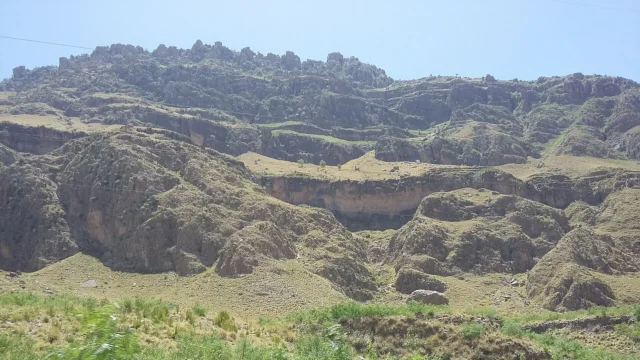
Loralai district is a natural gift for olive cultivation. Among the fortunate areas of Balochistan, the district’s geography, climate, soil structure and environment are exceptionally well suited to growing olives.
The district’s foothills and plains, its suitable temperatures and its natural environment favour the growth of olive trees and good yields. For this reason, olive planting in the district has produced positive results over the past several years, and Loralai is establishing itself as a major centre of olive cultivation in Balochistan.
Loralai’s importance is not limited to planting olive trees. The district has wide potential for developing a complete olive agro-industry. This could help make barren and uncultivated land usable, expand the cultivated area, improve land use, and create steady sources of income for farmers.
In areas where water shortages and seasonal conditions make traditional crops difficult to grow, suitable varieties of olive trees can prove an important alternative. However, for better results, analysis of local soil and water, selection of appropriate varieties and modern agricultural guidance are essential.
Olives are a long-lived and valuable fruit tree, and growers can earn economic benefits from their produce for several decades. Cultivation can support olive oil production as well as pickles, other food products and new business activity through value addition.
The expansion of this industry can create new investment opportunities in modern oil extraction units, packaging, branding, transport, storage and marketing, and can increase employment prospects for young people and women.
Awards won by Loralai’s olive oil in international competitions have highlighted the district’s agricultural capacity on the global stage. These awards show that, through modern scientific methods, standard processing and effective marketing, Balochistan’s olives can be brought up to global standards.
Winning a gold medal at a 2026 competition in London and silver awards in Germany and the United States in 2025 is a major achievement for Loralai. If modern processing, laboratory testing, international-standard packaging, branding and export facilities are further strengthened in Loralai, its olive oil could become a distinctive identity for Pakistan in world markets.
To achieve this, local landowners must be provided with modern machinery, technical training, quality saplings and direct access to markets. Olive cultivation is not merely an agricultural project for Balochistan but a long-term economic and environmental investment.
It can increase farmers’ incomes, make the agricultural sector self-sufficient, create jobs and strengthen the rural economy, and, with proper management, can also help protect land and promote tree planting.
Growing olive cultivation across Loralai, Musakhel, Duki and Barkhan, the whole Loralai division, and various areas of the Zhob division shows that there is ample scope to expand this industry further.
If government patronage, agriculture department research, private sector investment and the hard work of landowners are advanced under a coordinated strategy, Loralai could become Pakistan’s major olive production, processing and export centre in the coming years.
Loralai’s land is now building a reputation worldwide not only for its natural resources and agricultural produce but also for its high-quality olive oil. The growing number of olive trees, international awards and farmers’ interest signal that the region will achieve a prominent position in Pakistan’s agricultural sector in the future.
Habibullah Kakar receives national award and gold medal
A green olive revolution is under way in Balochistan, and Loralai district has become internationally known for its olive oil. On 14 and 15 November 2026, at the 11th National Olive Festival held at the Organic Village in Lahore, Habibullah Kakar, Director of Agriculture Research Loralai, was presented with the Olive Promotion Award and a gold medal in recognition of his outstanding services in olive promotion, tree planting and research.
Habibullah Kakar received this national honour in recognition of planting around 3.5 million olive trees across Balochistan since 2007 and of his 19 years of sustained hard work, professional skill and services to the development of this sector. This achievement is a source of pride not only for one officer but for all the people of Balochistan involved in farming, agriculture and research.
Olive planting in Balochistan began in 2007, and its positive results are now evident in Loralai, Musakhel, Duki, Barkhan, Zhob, Sherani, Qila Saifullah, Ziarat, Sanjawi, Aghbarg and Khost in Harnai, among other areas.
Hundreds of thousands of olive trees have grown in these areas, and an estimated 40 to 50 per cent of them are now bearing fruit regularly. This is giving fresh strength to olive production and the economic activity linked to it. Because of its natural climate, suitable geographical conditions and wide potential, Loralai district is becoming an important centre of this industry.
Olives grown here and the oil produced from them have gained a prominent place internationally for their quality and standard. Winning a gold medal at the 2026 London international competition and silver awards at international competitions in Germany and the United States in 2025 brought honour to Pakistan and Balochistan.
Success through joint efforts
The success of olive promotion in Balochistan is the result of the combined efforts and coordinated work of olive growers, the Agriculture Research Department (ARI), federal and provincial olive projects, and officers and staff of the Balochistan Agriculture Research and Development Centre (BARDC). These institutions have played an important role in tree planting, research, guiding farmers and increasing production.
According to experts in the olive sector, olive cultivation in Balochistan could play an important role in future in increasing farmers’ incomes, strengthening the agricultural economy, creating new jobs and promoting national exports. Under Vision 2030, the target has been set of raising the number of olive trees in Balochistan to 5 million.
The national award and gold medal received by Habibullah Kakar reflect how, through sustained hard work, research and joint efforts, Balochistan’s natural resources can be introduced nationally and internationally.
God willing, in the coming years Loralai district will emerge as a prominent olive hub for Pakistan in terms of olive cultivation, quality oil production, processing and global marketing, helping to lift Balochistan’s agricultural economy to new heights.
More from Balochistan
PkMAP Threatens Protests Over Neglect of Pashtun Districts in Federal Jobs

Railway Track Blown Up With Explosives in Kachhi, No Casualties Reported

Girls’ Middle School in Gwadar’s Gunz Under Repair with Coast Guards’ Help

Quetta assistant commissioner inspects LPG filling stations over safety, prices

IG Balochistan Visits Smart Women’s Police Station, Stresses Protection of Women
Security forces kill 10 terrorists in Nushki, Loralai and Mastung operations

Quetta: Food Authority Fines 19 Centres, Issues Corrective Notices to 25

Hub Authorities Dismantle Illegal Water Connections on Lasbela Canal’s Non-Command Area
Balochistan Chief Minister visits parliamentary secretary Mir Barkat Ali Rind to enquire after his health
Balochistan Approves First Insurance Company, Sui Fertiliser Complex Agreed
Deputy Commissioner Abdul Hameed Zehri Visits Kohlu District Headquarters Hospital, Reviews Medical Facilities