Government Unveils New Auto Policy with Five-Year Tariff Cuts and EV Tax Breaks
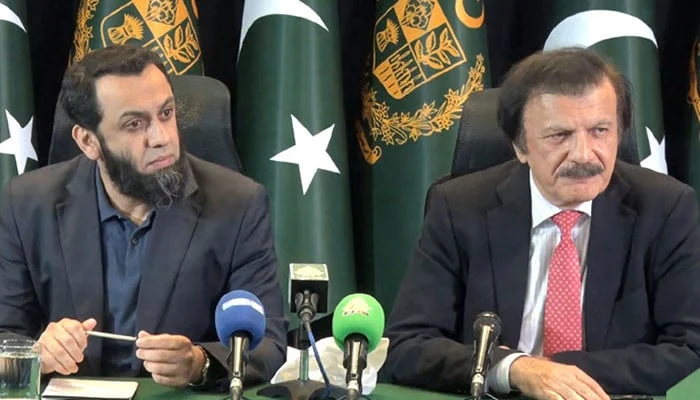
Islamabad: The federal government on Saturday announced a new auto policy aimed at making vehicles cheaper, promoting electric vehicles (EVs) and strengthening the local industry. Information Minister Attaullah Tarar and Prime Minister’s Adviser on Industry and Production Haroon Akhtar Khan announced the policy at a press conference.
According to Haroon Akhtar Khan, the policy rests on six pillars: affordable cars for the middle and low-income groups, higher exports, local manufacturing, vehicle safety, promotion of EVs and transparency. He said Prime Minister Shehbaz Sharif had directed that car prices be reduced.
Under the new tariff structure, import duties on completely built units (CBUs), assembly plants and parts will be reduced every year for the next five years. Apart from luxury cars, the prices of other vehicles will gradually come down.
Companies will be given mandatory local production targets. Those meeting export targets will receive a 5 per cent duty drawback on local taxes and levies (DLTL), rising by a further 10 per cent if exports increase. The concession will only be available if both export and local production targets are met; otherwise, a penalty will be imposed.
The policy includes 45 additional safety standards aligned with the UN’s WP.29 regulation.
The proposed sales tax on EVs is 1 per cent for fully electric vehicles, 6 per cent for range-extended EVs and 9 per cent for hybrids, though these rates are subject to IMF approval. EVs up to $50,000 will be exempt from CVT, withholding tax and FED, while more expensive vehicles will be classed as luxury.
The State Bank’s car financing scheme will raise the EV limit from Rs3 million to Rs10 million and extend the tenure from three to five years. Charging station operators will receive financial support, while sales tax on charging equipment has been cut to 1 per cent and customs duty abolished.
Haroon Akhtar Khan said that, to keep revenue unaffected under the IMF programme, income will be drawn from vehicles with engines above 1,000cc, while vehicles below 1,000cc will be exempt from additional measures. He added that sales of electric two-wheelers rose from 60,000 in fiscal year 2024-25 to 240,000 in 2025-26.
More from Business

Pakistan stock market investor base grows 47.3%; Balochistan adds 370 accounts in October

Offshore Oil and Gas Exploration Resumes After 20-Year Pause in Pakistan

Pakistan Resumes Offshore Oil and Gas Exploration After Two Decades

SECP Registers Over 5,000 New Companies in October, Total Surpasses 321,000

Kashmir Chowk Underpass Completed in 27 Days, Naqvi Guarantees Quality

Government Issues Notification Cutting Petrol and Diesel Prices

Government cuts petrol price by Rs7.06 and diesel by Rs3.71 per litre

Oil prices fall sharply after US midterm elections, Brent near $99

ECC approves Rs275 billion for water sector, defence grants and smart glasses import ban

Trade deficit hits $14.63 billion in first four months of fiscal year

PSX gains 1,454 points on hopes of Iran conflict resolution