
The battle with Rasil and the coming of Islam to Makran
Arab armies reached Makran's frontier in the seventh century, and their historians left the first detailed accounts of Balochistan, though the accounts differ.
In the previous chapter we saw that Sasanian inscriptions mention Turan, Makran and Paradan by name, but the regions themselves have no voice of their own. In the seventh century CE this silence breaks. Arab armies reach the frontier of Makran. Their historians, writing down these events two hundred years later, leave the first detailed accounts of Balochistan. The accounts differ from one another, so we present each one under the name of its narrator.
Two historians, two accounts
There are two major sources for the early Islamic history of Makran. The first is Ahmad ibn Yahya al-Baladhuri’s "Futuh al-Buldan", a ninth-century book with a separate chapter on the conquest of each region. The second is Muhammad ibn Jarir al-Tabari’s "Tarikh", which describes events year by year. In Encyclopaedia Iranica, Clifford Bosworth’s summary is that the Arab invaders entered Makran from the direction of Kirman during the caliphate of Hazrat Umar.
Tabari’s account: the battle of 23 AH
Under the events of 23 AH (643 to 644 CE), in a section titled "The Conquest of Makran", Tabari writes that an army led by Hakam ibn Amr al-Taghlibi advanced towards Makran. Shihab ibn Mukhariq joined them there, and Suhail ibn Adi and Abdullah ibn Abdullah ibn Itban arrived in person with reinforcements. The Muslims halted on the bank of a river where the army of Makran had gathered. Tabari gives the name of Makran’s ruler as "Rasil" and says he brought the ruler of Sindh across the river to face the Muslims. The translator, Smith, thinks the river is probably the Indus.
The fighting took place several days’ journey from the river, on the Makran side. According to Tabari, Rasil was defeated, the Muslims plundered his camp and pursued the fugitives to the river for several days, then returned and settled in Makran. Hakam ibn Amr sent one-fifth of the spoils to Hazrat Umar with Sahar al-Abdi and asked for instructions about the elephants that had been seized.
Here Tabari describes a memorable scene. Sahar described Makran in rhymed prose: a land whose plains are mountains, where water is scarce, dates are poor, the enemy is brave, good is little and evil is long; and what lies beyond is worse still. The caliph asked whether he was reciting rhymed speech or giving a true report. Sahar said he was giving a true report. Hazrat Umar then ordered that no army should advance beyond Makran while he was caliph, and wrote to Hakam ibn Amr and Suhail ibn Adi to keep their forces on this side of the river. On the elephants, the instruction was that they be sold in Muslim territory and the money divided among those entitled to the spoils.
Baladhuri’s account: a different sequence
Baladhuri does not give the event in this form. For the reign of Hazrat Umar he mentions only the naval raids of Uthman ibn Abi al-As al-Thaqafi, governor of Bahrain and Oman, for which the caliph rebuked him. In this chapter, the name Rasil, the sale of the elephants and the caliph’s question and answer about Makran are not recorded under Hazrat Umar.
He places the famous report on Makran in the reign of Hazrat Uthman. Abdullah ibn Amir, governor of Iraq, sent Hakim ibn Jabala al-Abdi to survey the frontier of Hind. On his return Hakim said that water is scarce, dates are poor and robbers are bold; "a small army will be lost there and a large army will starve". Hazrat Uthman asked whether he was giving a report or composing poetry, and gave no order to attack. A similar report, in somewhat different words, is attributed to Hakim ibn Jabala and Hazrat Uthman in the "Chach Nama", the Persian history of the conquest of Sindh. So the same sort of remark is placed at the court of Hazrat Umar by Tabari, and at the court of Hazrat Uthman by Baladhuri and the Chach Nama.
Hazrat Ali and the Umayyad era: frontier armies
According to Baladhuri, in the reign of Hazrat Ali, at the end of 38 AH or the beginning of 39 AH, Harith ibn Murra al-Abdi raided the frontier with permission. Later he and most of his companions were killed in the Qiqan region; the year of his death is given as 42 AH. Qiqan, or Kizkanan, in Bosworth’s words, was a town of the region of central Balochistan that was called Turan, and probably stood on the site of the later Kalat.
In the Umayyad period Makran became a permanent frontier garrison. Baladhuri writes that in the time of Hazrat Muawiya, Ziyad sent Sinan ibn Salama. According to Baladhuri, Sinan conquered Makran by force and set up a garrison there, though some narrators also attribute the conquest of Makran to Hakim ibn Jabala. Rashid ibn Amr al-Judaydi then became governor and raided Qiqan successfully, but was killed during a raid on the "Meds". Sinan ibn Salama came again for two years. Mundhir ibn Jarud raided Qiqan and conquered Qusdar (Khuzdar), where he died.
Here too the accounts are not the same. According to the Chach Nama, Rashid ibn Amr was returning with tribute from Qiqan when he was killed in a bloody battle with local people in the mountains of Mozar and Bharaj. Command then passed again to Sinan ibn Salama. Sinan advanced as far as Qiqan, but the people rose up and killed him in the Budhiya region. In Baladhuri, Rashid is killed in the raid on the "Meds" and Sinan is governor again for two years; his killing is not mentioned there.
Makran: a frontier province
The overall picture of these campaigns is that in the Umayyad period Makran was a frontier province of the Muslims, whose governors were appointed from Iraq. According to Baladhuri, Hajjaj ibn Yusuf made Sa’id ibn Aslam governor of Makran, and he was killed at the hands of the Alafi brothers. After him Mujja’a ibn Si’r and Muhammad ibn Harun served as governors. Then the army of Muhammad ibn Qasim advanced towards Sindh by way of Makran; Bosworth gives the year of this attack as 92 AH / 711 CE. Baladhuri writes that Muhammad ibn Qasim stayed some days in Makran, then went on, conquering Qanzabur and Armaiil. In Bosworth’s words, Makran was the "springboard" for the conquest of Sindh.
From the Sindh side, the Chach Nama says that before the Arabs came, the kingdom of Rai Sihras, son of Sahasi, extended west to Makran. It adds that Raja Chach later marked his frontier by planting date trees on a small stream between Kirman and Makran. So when the Arabs reached Makran, the region was a frontier between Sindh and Iran.
In the eyes of Arab geographers
For about two centuries after the conquest, history is almost silent on Makran. Bosworth writes that until the end of the ninth century "practically nothing is known". The Persian book "Hudud al-Alam", from the late tenth century, counts Makran as part of Sindh, names Tiz (near present-day Chabahar) as its great port and Kij as the seat of its ruler. According to Bosworth’s summary, medieval geographers describe Makran as thinly populated and poor in resources, its special product being sugar-cane syrup, or "panidh". On Turan, Bosworth, citing Istakhri and Ibn Hawqal, writes that its main town was also called "Turan", and that the settlements of the region included Qusdar, Kizkanan and Sibi. According to "Hudud al-Alam", many Muslims and "Gabrakan" (non-Muslims) lived in Turan. In Bosworth’s words, the aridity and bleakness of Makran blocked the way to permanent Arab settlement.
The coming of Islam to Makran is thus not a single battle but a long process: a report that stopped a caliph from advancing, governors who came from Iraq and were often killed here, a frontier garrison, and finally the route by which the history of Sindh was changed.
Next Sunday: Muhammad ibn Qasim’s route (711 CE): from Makran to Debal.
Sources
- Al-Ṭabarī, The History of al-Ṭabarī, Volume XIV: The Conquest of Iran, A.D. 641–643/A.H. 21–23, translated and annotated by G. Rex Smith, State University of New York Press, Albany, 1994: Preface (Tabari 839–923), Translator's Foreword p. xv (23/643–644), "The Conquest of Makrān", pp. 77–78 (n. 343: the river "likely … the Indus"). https://archive.org/details/tabarivolume14 (p. 77: https://archive.org/details/tabarivolume14/page/n101)
- Al-Balādhurī, The Origins of the Islamic State (Kitāb Futūḥ al-Buldān), Part II, translated by Francis Clark Murgotten, Columbia University Studies in History, Economics and Public Law vol. LXVIII, whole no. 163A, New York, 1924, Part XX "Conquest of as-Sind": 'Uthman al-Thaqafi p. 209; Hakim ibn Jabala pp. 209–210; al-Harith ibn Murra p. 210; Sinan ibn Salama, Rashid ibn 'Amr pp. 211–212; al-Mundhir p. 213; Sa'id ibn Aslam, Mujja'a, Muhammad ibn Harun p. 215; Muhammad ibn al-Qasim in Mukran p. 217. https://archive.org/details/originsoftheisla032520mbp (p. 209: https://archive.org/details/originsoftheisla032520mbp/page/n226). Part I, translated by Philip Khuri Hitti, New York, 1916, Introduction p. 5 (Baladhuri's death in 279/892; Tabari's annalistic method). https://archive.org/details/originsofislamic00balarich/page/n21
- Clifford Edmund Bosworth, "MAKRĀN", Encyclopaedia Iranica, online edition, published 11 February 2011, updated 26 November 2012. https://iranicaonline.org/articles/makran
- Clifford Edmund Bosworth, "ṬURĀN", Encyclopaedia Iranica, online edition, published 11 February 2011, updated 18 January 2013. https://iranicaonline.org/articles/turan
- The Chachnamah: An Ancient History of Sind, translated from the Persian by Mirza Kalichbeg Fredunbeg, Commissioner's Press, 1900: Rai Sahiras's frontiers p. 11; Chach's boundary between Kirman and Makran p. 38; Hakim's report to 'Uthman pp. 59–60; Rashid and Sinan pp. 63–65. https://archive.org/details/in.ernet.dli.2015.285133 (p. 64: https://archive.org/details/in.ernet.dli.2015.285133/page/n77)
- Ḥudūd al-ʿĀlam, "The Regions of the World": A Persian Geography, 372 A.H.–982 A.D., translated and explained by V. Minorsky, E. J. W. Gibb Memorial, Luzac, London, 1937, § 27 "Sind", p. 123 (Tiz, Kij, Turan). https://archive.org/details/in.ernet.dli.2015.281514/page/n142
 More from E-Magazine
More → Aamer Sohail: the aggressive left-handed opener
 Abd al-Malik ibn Marwan: Arabic offices, new coins and the octagonal domed shrine
 Abd al-Rahman I: the emir who founded Cordoba's Great Mosque
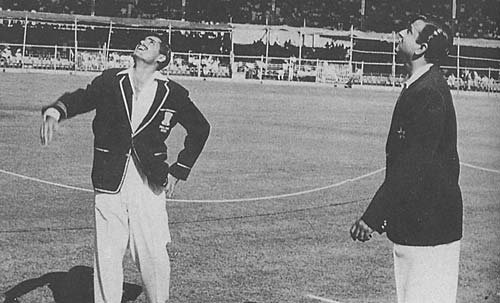 Abdul Hafeez Kardar: Pakistan cricket's first captain
 Abdul Razzaq: the all-rounder who either blocked or hit
 Abel Tasman: the Dutch voyage that found Tasmania and New Zealand
 Afanasy Nikitin: the Russian merchant who travelled to India
 Ahmad ibn Majid: master navigator of the Indian Ocean