US-Iran Deal Hopes Rise as Ishaq Dar Calls Middle East Conflict Unaffordable
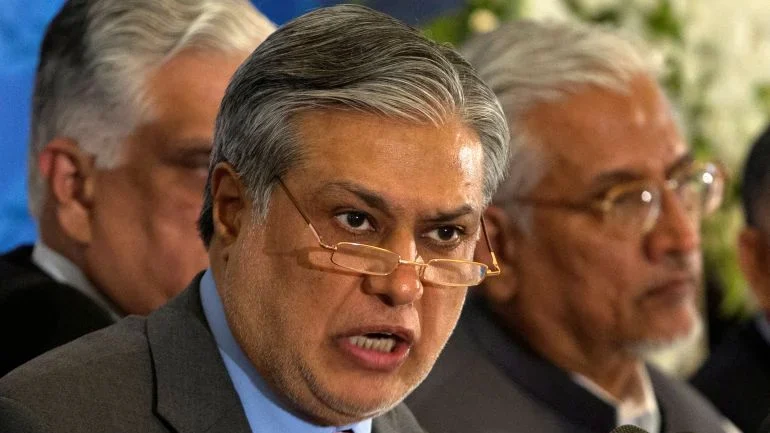
ISLAMABAD: Deputy Prime Minister and Foreign Minister Senator Mohammad Ishaq Dar has expressed hope that a deal between the United States and Iran will be reached soon. He said the international community cannot afford prolonged disputes in the Middle East.
In an exclusive interview with the international broadcaster Euronews, the Deputy Prime Minister said he is by nature an optimistic person and believes that sooner or later, and he hopes very soon, we will achieve our goal, because the world cannot afford disruption in the energy supply chain, rising prices and the hardships of ordinary people. People in our country are also facing these difficulties.
Despite violations following the 18 June agreement, Ishaq Dar made clear that Islamabad has not withdrawn from the peace process, and that efforts to persuade both the United States and Iran to abide by the signed agreement are continuing.
Mediation role
In response to a question, Ishaq Dar reaffirmed Pakistan’s commitment to an independent and multi-dimensional foreign policy and described Pakistan’s important mediating role in direct talks between the United States and Iran. He stressed that dialogue and diplomacy are the only viable path to resolving severe international disputes, and rejected unilateral actions and bloc politics.
He said Pakistan was the first country to condemn the Israeli strike that marked the escalation beginning on 28 February. Immediately afterwards, he said, he contacted Iranian Foreign Minister Abbas Araghchi and advised him to show restraint and not to target Gulf and Middle Eastern countries.
According to the Deputy Prime Minister, Pakistan’s diplomatic efforts entered an important phase on 10 and 11 April, when Islamabad hosted the first face-to-face direct talks between the United States and Iran in 47 years. In talks lasting 21 hours, the two sides came very close to an agreement, but one delegation paused the negotiations to consult its leadership.
As a result of Pakistan’s continued mediation, the Islamabad Memorandum of Understanding (MoU) was concluded on 18 June. It was signed online by US President Donald Trump, who was then attending the G7 summit in Europe, and by the Iranian President.
He also referred to a five-point peace initiative for the Middle East, prepared in consultation with Chinese Foreign Minister Wang Yi during his visit to China on 31 March. After the joint statement issued in March by 12 Islamic countries in Riyadh, the Regional Four (R4) grouping, comprising Pakistan, Saudi Arabia, Türkiye and Egypt, played an active role in promoting de-escalation and restraint. On 23 October, joint talks were held in Istanbul with the E4 grouping of Britain, France, Germany and Italy, and Germany has now invited both groups for further consultations in December.
India, Afghanistan and the economy
On relations with India, he said the resumption of bilateral talks depends on New Delhi. Referring to the changes to the constitutional status of Indian-occupied Jammu and Kashmir on 5 August 2019, he said these steps were contrary to United Nations Security Council resolutions. He noted that after the Pahalgam incident in May 2025, Prime Minister Shehbaz Sharif offered an immediate international investigation, which India rejected.
Ishaq Dar strongly objected to India’s announcement that it would keep the 1960 Indus Waters Treaty in abeyance. In his view, international agreements cannot be suspended unilaterally, and he cited the Court of Arbitration ruling that upheld the legal standing of the treaty.
He said the agriculture, employment and food security of Pakistan’s 260 million people depend on water supplies, so no agreement can be kept ineffective, and Pakistan cannot simply accept any change to it. In his view, using water as a weapon is not appropriate in any circumstances.
On Afghanistan, he said Pakistan wants to see its neighbour stable and prosperous. To end a stalemate lasting four years, he made three visits to Kabul in 2025, and Pakistan implemented Afghan demands on trade, the economy and Afghan refugees within eight weeks. However, Pakistan’s sole demand, that Afghan soil not be used for terrorism, has yet to be met.
He said Pakistan has shared credible evidence with international organisations showing links between the major terrorist attacks of last October and groups operating from Afghanistan. These groups include Tehreek-e-Taliban Pakistan, the Balochistan Liberation Army, the Majeed Brigade, ISIS-Khorasan and the East Turkistan Islamic Movement. According to him, Pakistan has sacrificed 100,000 lives in counter-terrorism and has borne economic losses of 150 billion dollars.
Discussing the economy, he said the country’s external debt stands at 130 billion dollars, while the potential of undiscovered mineral resources and rare earth elements is between 6 and 10 trillion dollars. Sixty countries took part in the third Pakistan Minerals Investment Forum.
He referred to the period 2013 to 2017, when the economy reached the 24th largest in the world, but said that due to policy changes Pakistan had slipped to 47th place by 2022. He stressed the need for a charter of economy along the lines of the 2006 Charter of Democracy. According to him, Pakistan has entered CPEC 2.0 with China, which is expanding cooperation into technology, artificial intelligence, agriculture and people’s livelihoods.
Speaking about progress in relations with the European Union and Britain, he said two strategic dialogues have taken place in the past year and bilateral trade has reached about 9 billion dollars. He urged European institutions to extend Pakistan’s GSP Plus trade facility, whose current term ends at the close of this year. He said Islamabad is fully prepared to implement the 32 international conventions required under the new system that comes into force on 1 January 2029.
On the security concerns of European investors, he rejected the perception that Pakistan is a high-risk market, calling it essentially a conceptual problem. He said special security forces are deployed to protect foreign investors. He also reaffirmed Pakistan’s efforts to secure support from all candidates for the next United Nations Secretary-General for multilateral reforms in global institutions.
More from Pakistan
PTI Leaves Decision on New Provinces Referendum to Founder
Fifteen more terrorists killed, four areas cleared in Mastung operation
Shayan Bashir and Rashid Bhatti Announce Split from PTI and Opposition Alliance
Govt invites PTI to electoral reforms committee, rejects demand for equal representation
Mustafa Kamal: New Provinces Essential, December May Prove Crucial
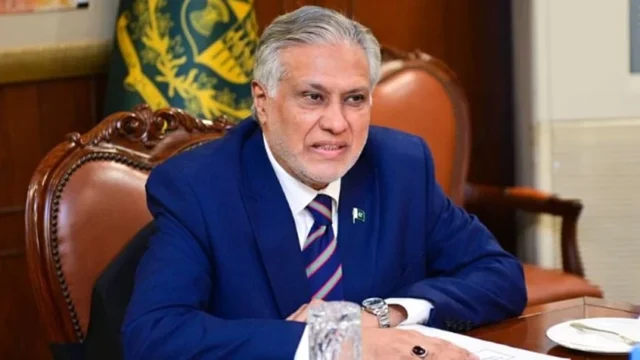
Revival of talks with India depends on New Delhi’s conduct: Ishaq Dar
No objection to new provinces, constitutional route must be followed: Nayyar Bokhari
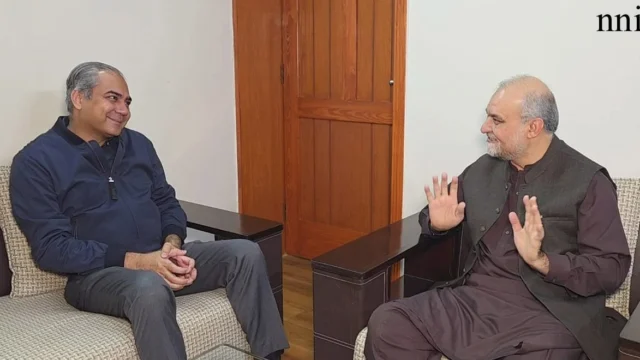
Mohsin Naqvi meets Hafiz Naeem ur Rehman, discusses law and order
£190m Case: Appeals of PTI Founder, Bushra Bibi Set for November 25
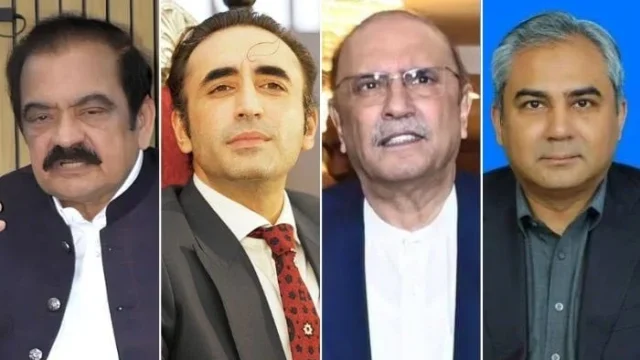
Rana Sanaullah urges Zardari to rein in sons over new provinces debate

Militants Disguised as Women Killed Fleeing in Rickshaw in Mir Ali Operation