
190 Million Pound Case: Lawyers of PTI Founder and Bushra Bibi Finalise Arguments
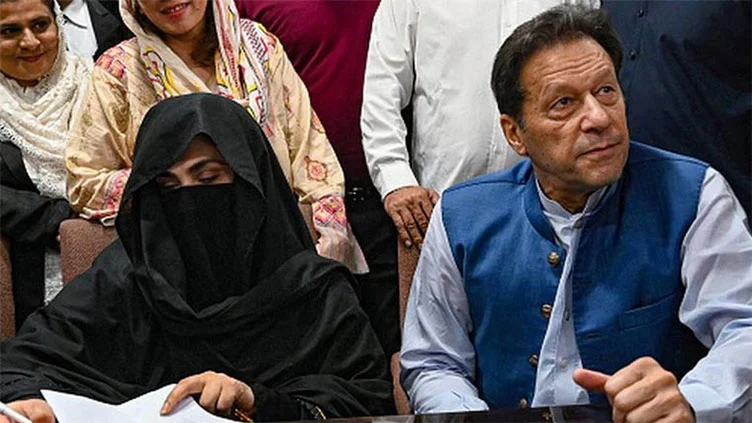
ISLAMABAD: Lawyers for the PTI founder and Bushra Bibi have finalised their arguments in the 190 million pound case. According to sources, the arguments include several key points, among them an review of British and Pakistani law.
The points include the British National Crime Agency (NCA) agreement and the nature of the money, Pakistani trust laws, the rejection of the allegation of benefit in return, a hurried trial and transparency, a conviction based on assumptions, the difference in working hours, the collective decision of the federal cabinet and constitutional protection, the lack of personal financial benefit, immunity for cabinet decisions, and objections to the trial procedure and evidence.
NCA Agreement and Ownership of the Money
The 190 million pound case, also known as the Al-Qadir Trust case, sees defence counsel Barrister Salman Safdar argue that the settlement reached with Britain’s NCA was a purely civil agreement, in which no crime or money laundering had been proven. According to the British court’s ruling, the money was not declared proceeds of crime.
The money was frozen in Britain, and had the parties not agreed to the deal, it would never have come to Pakistan. Under the terms of the agreement, the money was transferred to the account of the Supreme Court of Pakistan, not directly to the Government of Pakistan’s treasury, because the method of transfer had been agreed in advance between the British agency and the parties.
According to the lawyers, the prosecution (NAB) did not present any NCA official from Britain as a witness in court, nor did it prove the original agreement documents in accordance with legal requirements.
Collective Decision of the Cabinet
According to the lawyers, under the Constitution of Pakistan, decisions of the federal cabinet fall under collective responsibility. The confidentiality agreement with the British agency in December 2019 was approved not by the prime minister alone, but by the entire federal cabinet.
According to the legal arguments, the prime minister alone cannot be individually convicted in a criminal case for a cabinet’s policy or administrative decision, while other cabinet members were not named as co-accused in this case.
Legal Status of the Trust
On the legal status of the trust, the lawyers argue that to prove corruption under Section 9 of the NAB Ordinance, it is necessary to prove that the accused obtained a personal financial benefit. Defence lawyers say the Al-Qadir University Trust is a registered charitable and educational trust, not personal property.
Under Pakistani law, trust property always remains the property of the trust or the public, and neither the PTI founder nor Bushra Bibi can sell the land, transfer it into their own names, or derive any personal profit from it. Free education is being provided to students at the university, which negates any personal benefit.
Trial and Objections to Evidence
NAB alleges that land was taken in return for cabinet approval, whereas the lawyers argue that the donation of land for Al-Qadir University had begun months before the NCA’s final settlement and the cabinet’s approval. They say linking the two matters is therefore based purely on assumptions.
According to the lawyers, before NAB’s inquiry began, the full sum equivalent to 190 million pounds had already been transferred to the Supreme Court’s account. In other words, the national treasury suffered no loss, and the money was deposited with a constitutional institution, the Supreme Court.
Under the established principle of criminal law, the prosecution must prove its case beyond all reasonable doubt. The defence argues that there is no direct evidence in this case and that the conviction was based merely on conjecture.
The central figures alleged to have received or given the benefit did not appear in court, and their statements were not recorded. Relying solely on one-sided government witnesses in their absence is, the defence says, contrary to the requirements of the Law of Evidence.
The appeal also raises the point that proceedings in the trial court were completed with unusual haste, and that because of the restrictions of jail trials, the accused faced difficulties in securing a fair trial under Article 10-A.
More from Pakistan

Rana Sanaullah urges Zardari to rein in sons over new provinces debate

Militants Disguised as Women Killed Fleeing in Rickshaw in Mir Ali Operation
Bilawal Bhutto Says a Minister Derails PM’s Economic Plans

Pakistan and Türkiye Begin Offshore Oil and Gas Survey in Sindh and Makran

Pakistan rejects Indian allegations at UN, Foreign Office hits back sharply

Federal Cabinet approves issuance of five ordinances related to Khyber Pakhtunkhwa

Fazlur Rehman: Your jails will end, but our workers will not

Federal Minister Musadiq Malik Arrives in New Delhi for SCO Civilisational Dialogue

Field Marshal Asim Munir Visits Miranshah, Vows to End Terrorism

190m Pound Case: Prosecution Completes Preparations for Rebuttal Arguments

Residents of Mir Ali Thank Army for Restoring Peace Following Operation
